
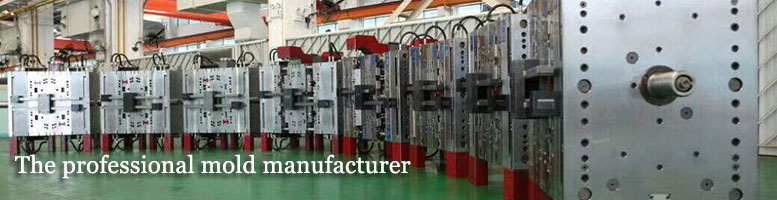
The company currently has over 200 employees and produces around 400-600 sets of various plastic injection molds, including office appliances,auto parts,communicating equipments,medical instruments, annually. We define quality as the overall customer satisfaction and actively promote standardization of components and management. GoodBo Mould has global customers such as Sony,Media,FAW-Volkswagen,Ford,Nissan,Canon,Samsung,Haier,Hyundai.
| Shaping Mode | Injection Mould |
| Place of Origin | China |
| Mould making technology | 3D Modelling,Plastic flow/deform simulation...etc. |
| Product Material | Plastic/Metal |
| Colors | Customized Colors |
| Product Name | twin shot injection moulds |
| Mold material | P20/718/738/NAK80/S136 |
| Material | PPS(poly phenylene sulfide),PPO(poly phenylene oxide),ABS(acrylonitrile-butadiene-styrene copolymer)...etc. |
| Design software | CAD/PROE/UG/3D/DWG/IGS/STEP/PDF/JPG |
| Cavity | Single/Multi Cavity moulds |
| Mould life | 450000 shots |
| Application | Defence,Architectural,Medical...etc. |
| Runner | Cold Runner. Hot Runner: Yudo |
| Surface treatment | Polish. Etched. Texture |
| Certification | ISO9001:2015 |
| Size(cm) | 214 * 150 * 197 Please consult us for specific details |
| Packaging Details | 1. injection mold: by pallet or as buyer's request. 2. injection parts: by bags then export carton, or as buyer's request. |
| Export region | Asia,Oceania,Africa |
| Port | Shenzhen |
| Supply Ability | 3000 Piece/Pieces per Day Please contact the us to check the exact delivery time |
| Samples | Maximum order quantity: 1000 piece Please contact us to confirmation |
GoodBo Mould is one of the leading twin shot injection moulds manufacturers in China, and our mission is to provide customers with high-quality products and the highest quality service.
We believe quality begins with mould design capability and consider it to be the key to successful mould making. So at GoodBo Mould, every mould designers will do the integrated engineering analysis from start to enable the high quality.
Our engineering and mold making technology include:Pro/Engineer(3D Modelling),SolidWorks(3D Modelling),AutoCad(2D Modelling),Moldflow Mold Advisor(Plastic flow/deform simulation),etc.
twin shot injection moulds---FAQs Guide
2.How do twin shot injection moulds hardness and mould flexibility affect its performance?
3.What is the difference between high-pressure and low-pressure twin shot injection moulds?
4.What type of steel is normally used for a twin shot injection moulds?
5.What are the advantages and disadvantages of twin shot injection moulds made from aluminium?
6.How can a twin shot injection moulds be corrosion-resistant?
7.What are the after-sales services available for twin shot injection moulds?
8.What technologies are used to produce higher quality twin shot injection moulds?
9.Is the twin shot injection moulds adaptable to different injection molding machines?
10.What materials are usually used to make twin shot injection moulds?
11.How is the surface of a twin shot injection moulds treated to improve its performance?
12.What type of runner and gate systems are incorporated into the twin shot injection moulds design?
13.What is the difference between an injection mould and a compression twin shot injection moulds?
14.What should be taken into consideration when selecting a twin shot injection moulds for a certain application?
1.What kind of coatings are used for twin shot injection moulds surfaces to reduce wear and tear?
Our twin shot injection moulds products undergo strict quality control to ensure customer satisfaction.Common coatings used for mould surfaces to reduce wear and tear include hard chrome plating, electroless nickel plating, and diamond-like carbon (DLC) coatings. Hard chrome plating is a hard, wear-resistant coating that is applied to the mould surface to reduce friction and wear. Electroless nickel plating is a corrosion-resistant coating that is applied to the mould surface to reduce wear and tear. Diamond-like carbon (DLC) coatings are a type of hard, wear-resistant coating that is applied to the mould surface to reduce friction and wear.
2.How do twin shot injection moulds hardness and mould flexibility affect its performance?
We pay attention to user experience and product quality, and provide the best product quality and lowest production cost for cooperative customers.Mould hardness and mould flexibility can have a significant impact on the performance of a mould. Harder moulds are more durable and can withstand higher temperatures and pressures, making them ideal for high-volume production. However, they are also more difficult to modify and can be more expensive to produce. On the other hand, softer moulds are more flexible and can be modified more easily, making them ideal for low-volume production. However, they are also more prone to wear and tear and can be less durable.

3.What is the difference between high-pressure and low-pressure twin shot injection moulds?
We focus on teamwork and communication to achieve common goals, We attach great importance to this detail.High-pressure moulds are used to create parts with complex shapes and intricate details, while low-pressure moulds are used to create parts with simpler shapes and fewer details. High-pressure moulds require more pressure to form the parts, while low-pressure moulds require less pressure. High-pressure moulds are more expensive and require more time to create the parts, while low-pressure moulds are less expensive and require less time.
4.What type of steel is normally used for a twin shot injection moulds?
We focus on our customers' needs and strive to meet their expectations, so we take this very seriously.
Tool steel is typically used for moulds. Common types of tool steel include high-speed steel, hot-work steel, cold-work steel, shock-resistant steel, and plastic mould steel.

5.What are the advantages and disadvantages of twin shot injection moulds made from aluminium?
We are a new twin shot injection moulds manufacturer.
Advantages:
1. Aluminium is lightweight and strong, making it ideal for creating intricate moulds.
2. Aluminium is a good conductor of heat, which makes it ideal for use in casting processes.
3. Aluminium is corrosion-resistant, making it a great choice for moulds that will be used in wet or humid environments.
4. Aluminium is relatively inexpensive compared to other metals, making it a cost-effective choice for moulds.
Disadvantages:
1. Aluminium is not as strong as other metals, making it more prone to wear and tear.
2. Aluminium is not as durable as other metals, making it more susceptible to damage from heat and pressure.
3. Aluminium is not as easy to work with as other metals, making it more difficult to create intricate moulds.
4. Aluminium is not as resistant to corrosion as other metals, making it more prone to rusting.
6.How can a twin shot injection moulds be corrosion-resistant?
We have a wide range of twin shot injection moulds customer groups and establishes long -term cooperative relationships with partners. The countries we provide services include Bahrain,Colombia,Congo, Republic of the,Lithuania,Senegal,Papua New Guinea.Moulds can be made corrosion-resistant by using materials such as stainless steel, aluminum, and other alloys that are resistant to corrosion. Additionally, the moulds can be coated with a corrosion-resistant material such as a paint or a powder coating.

7.What are the after-sales services available for twin shot injection moulds?
GoodBo Mould uses a integrated approach to establish the best process for the manufacturing of your product. Once the production is in place we use web-based communication, design and file transfer tools that streamline every step processing and fulfilling the project.All project management teams communicate in English.
8.What technologies are used to produce higher quality twin shot injection moulds?
We pay attention to employee development and benefits, and provide a good working environment in order to improve the efficiency of employees and improve the quality management of twin shot injection moulds products.
1. Computer Numerical Control (CNC) Machining: CNC machining is a process that uses computer-controlled machines to cut and shape materials into precise shapes and sizes. This technology is used to produce higher quality moulds with greater accuracy and repeatability.
2. 3D Printing: 3D printing is a process that uses a digital model to create a physical object. This technology is used to produce complex moulds with intricate details and shapes.
3. Laser Cutting: Laser cutting is a process that uses a laser beam to cut and shape materials into precise shapes and sizes. This technology is used to produce higher quality moulds with greater accuracy and repeatability.
4. Vacuum Forming: Vacuum forming is a process that uses a vacuum to form plastic sheets into desired shapes. This technology is used to produce higher quality moulds with greater accuracy and repeatability.
5. Injection Moulding: Injection moulding is a process that uses a heated plastic material to form a desired shape. This technology is used to produce higher quality moulds with greater accuracy and repeatability.
9.Is the twin shot injection moulds adaptable to different injection molding machines?
We are committed to providing personalized solutions and established long -term strategic cooperative relationships with customers.Yes, the mold can be adapted to different injection molding machines. Depending on the type of mold and the complexity of the part, some modifications may be necessary.
10.What materials are usually used to make twin shot injection moulds?
We have established long-term and stable partnerships with our suppliers, so we have great advantages in price and cost and quality assurance.Moulds are typically made from metal, plastic, rubber, silicone, or plaster.

11.How is the surface of a twin shot injection moulds treated to improve its performance?
We have established a good reputation and reliable partnerships within the twin shot injection moulds industry.The surface of a mould can be treated in a variety of ways to improve its performance. Common treatments include polishing, sandblasting, shot peening, and coating with a release agent. Polishing the surface of the mould can help reduce friction and improve the mould's ability to release parts. Sandblasting can help remove any imperfections or burrs on the surface of the mould. Shot peening can help increase the surface hardness of the mould and improve its wear resistance. Finally, coating the mould with a release agent can help reduce sticking and improve the mould's ability to release parts.
12.What type of runner and gate systems are incorporated into the twin shot injection moulds design?
We continue to invest in research and development and continue to launch innovative products.The type of runner and gate systems incorporated into the mold design depend on the type of part being molded and the desired outcome. Common runner and gate systems include cold runner systems, hot runner systems, direct gating, edge gating, and valve gating.

13.What is the difference between an injection mould and a compression twin shot injection moulds?
We have been working hard to improve service quality and meet customer needs.An injection mould is a tool used to produce plastic parts by injecting molten material into a mould cavity. The molten material is injected under pressure and cooled to form the desired shape. A compression mould is a tool used to produce plastic parts by pressing a preheated plastic material into a mould cavity. The material is then cooled and hardened to form the desired shape. The main difference between an injection mould and a compression mould is the way in which the molten material is introduced into the mould cavity.
14.What should be taken into consideration when selecting a twin shot injection moulds for a certain application?
Our mission is to provide customers with the best solutions for twin shot injection moulds.
1. The type of material to be used in the mould.
2. The size and shape of the part to be produced.
3. The complexity of the part design.
4. The production volume required.
5. The type of injection moulding machine to be used.
6. The type of cooling system to be used.
7. The type of ejection system to be used.
8. The type of surface finish required.
9. The cost of the mould.
10. The lead time for the mould.

Tags:plastic crate moulds,pvc plastic molding,automotive air conditioning plastic mold,3d injection molding,injection compression molds,home plastic injection molds