
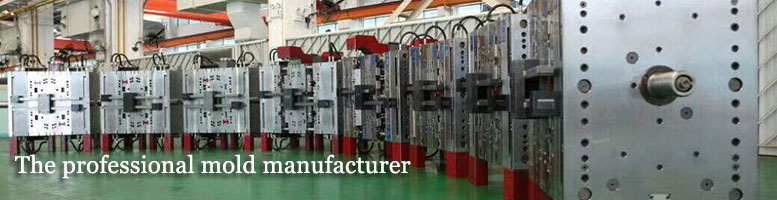
Our factory is located in Shenzhen, the famous "manufacturing capital" of China. Having a professional management team and adopting a modern horizontal open management model. We define quality as the overall customer satisfaction and actively promote standardization of components and management. GoodBo Mould has global customers such as Hyundai,HP,KONKA,Canon,Nissan,HONDA,Media,Samsung,Haier,Ford. We believe that "high quality comes from every detail", which is why we win customer loyalty. We welcome you to explore various possibilities.
| Product name | thin wall injection mold |
| Place of Origin | Shenzhen,Guangdong |
| Runner | Cold Runner. Hot Runner: Yudo |
| Port | Shenzhen |
| Colors | Customized Colors |
| Condition | New |
| Design software | CAD/PROE/UG/3D/STEP/PDF/JPG |
| Packing Size(cm) | 219*136*175 Specific consultation with us |
| Brand Name | GoodBo Mould |
| Export region | Europe,America,Asia |
| Export country | Europe,America,Asia...etc |
| Mould life | 450000 shots |
| Certification | ISO90001 |
| Product Material | PA(polyamide),ABS(acrylonitrile-butadiene-styrene copolymer),PP(polypropylene)...etc. |
| Mould making technology | CNC Programming,3D Modelling...etc. |
| Application | Architectural,Aerospace,FMCG...etc. |
| After-sales Service | Always maintained |
| MOQ | Negotiable |
| Packaging Details | Packed in cartons |
| Supply Ability | 2000-100000 Set/Sets per Month (See specific model products) |
| Lead time (days) | 20-40 (To be negotiated) |
| Mould Base | LKM,HASCO... |
GoodBo Mould is one of the leading thin wall injection mold manufacturers in China, and our mission is to provide customers with high-quality products and the highest quality service.
GoodBo Mould uses a integrated approach to establish the best process for the manufacturing of your product. Once the production is in place we use web-based communication, design and file transfer tools that streamline every step processing and fulfilling the project.
Files can be imported and exported in all common formats, including: IGES,DXF,STP,PRT, etc. If your files are in another format, contact your project manager and we can arrange to accommodate your needs. File transfers are done via FTP or E-mails. To quickly and easily transfer a design file to GoodBo Mould, contact your project manager for instructions.
thin wall injection mold---FAQs Guide
2.What training and support are provided for users working with the thin wall injection mold?
3.About thin wall injection mold warranty
4.What type of steel is normally used for a thin wall injection mold?
5.How does the thin wall injection mold contribute to achieving a desired surface finish on the molded products?
6.How does the thin wall injection mold contribute to cost-effectiveness in terms of production efficiency and material utilization?
7.How does the size of the gate in a thin wall injection mold affect the speed of the moulding process?
8.About thin wall injection mold production equipment
9.What kind of coatings are used for thin wall injection mold surfaces to reduce wear and tear?
10.Are there any special solutions for making thin wall injection mold with deep walls or complex shapes?
1.What technologies are used to produce higher quality thin wall injection mold?
We pay attention to employee development and benefits, and provide a good working environment in order to improve the efficiency of employees and improve the quality management of thin wall injection mold products.
1. Computer Numerical Control (CNC) Machining: CNC machining is a process that uses computer-controlled machines to cut and shape materials into precise shapes and sizes. This technology is used to produce higher quality moulds with greater accuracy and repeatability.
2. 3D Printing: 3D printing is a process that uses a digital model to create a physical object. This technology is used to produce complex moulds with intricate details and shapes.
3. Laser Cutting: Laser cutting is a process that uses a laser beam to cut and shape materials into precise shapes and sizes. This technology is used to produce higher quality moulds with greater accuracy and repeatability.
4. Vacuum Forming: Vacuum forming is a process that uses a vacuum to form plastic sheets into desired shapes. This technology is used to produce higher quality moulds with greater accuracy and repeatability.
5. Injection Moulding: Injection moulding is a process that uses a heated plastic material to form a desired shape. This technology is used to produce higher quality moulds with greater accuracy and repeatability.
2.What training and support are provided for users working with the thin wall injection mold?
Our thin wall injection mold products have competitive and differentiated advantages, and actively promote digital transformation and innovation.Training and support for users working with the mold will vary depending on the manufacturer. Generally, the manufacturer will provide detailed instructions on how to use the mold, as well as safety guidelines. They may also provide technical support and troubleshooting assistance. Additionally, some manufacturers may offer on-site training and support for users.
3.About thin wall injection mold warranty
If the quality is poor, we will provide a 100% refund. Firstly, we will investigate the root cause of the problem and then take measures to prevent it from happening again in the future. This includes changes to mold design, process, or materials used.
4.What type of steel is normally used for a thin wall injection mold?
We focus on our customers' needs and strive to meet their expectations, so we take this very seriously.
Tool steel is typically used for moulds. Common types of tool steel include high-speed steel, hot-work steel, cold-work steel, shock-resistant steel, and plastic mould steel.

5.How does the thin wall injection mold contribute to achieving a desired surface finish on the molded products?
We adhere to the principle of integrity and transparency, and establish long -term relationships with partners, and we attach great importance to this detail.The mold contributes to achieving a desired surface finish on the molded products by providing a smooth, uniform surface that can be polished or textured to the desired finish. The mold also helps to ensure that the product is free of any defects or imperfections that could affect the surface finish. Additionally, the mold can be designed to create specific textures or patterns on the surface of the product.
6.How does the thin wall injection mold contribute to cost-effectiveness in terms of production efficiency and material utilization?
Being one of the top thin wall injection mold manufacturers in China, We attach great importance to this detail.Molds are used to create parts and components with a high degree of accuracy and repeatability. This helps to reduce waste and increase production efficiency. The use of molds also allows for the efficient use of materials, as the same mold can be used to create multiple parts with the same shape and size. This reduces the amount of material needed to produce a given number of parts, resulting in cost savings. Additionally, molds can be designed to reduce the amount of time needed to produce a part, further increasing production efficiency and cost-effectiveness.

7.How does the size of the gate in a thin wall injection mold affect the speed of the moulding process?
We are a professional thin wall injection mold company dedicated to providing high quality products and services.The size of the gate in a mould affects the speed of the moulding process because it determines the amount of material that can be injected into the mould at one time. A larger gate size allows for more material to be injected at once, which can speed up the moulding process. However, a larger gate size can also lead to increased cycle times due to the increased amount of material that needs to be cooled before the mould can be opened.
8.About thin wall injection mold production equipment
Our mold processing equipment mainly includes stamping equipment, CNC machining equipment, electrical discharge machining equipment, wire cutting machines, plasma cutting machines, lathes, milling machines, grinders, drilling machines, and casting equipment.

9.What kind of coatings are used for thin wall injection mold surfaces to reduce wear and tear?
Our thin wall injection mold products undergo strict quality control to ensure customer satisfaction.Common coatings used for mould surfaces to reduce wear and tear include hard chrome plating, electroless nickel plating, and diamond-like carbon (DLC) coatings. Hard chrome plating is a hard, wear-resistant coating that is applied to the mould surface to reduce friction and wear. Electroless nickel plating is a corrosion-resistant coating that is applied to the mould surface to reduce wear and tear. Diamond-like carbon (DLC) coatings are a type of hard, wear-resistant coating that is applied to the mould surface to reduce friction and wear.
10.Are there any special solutions for making thin wall injection mold with deep walls or complex shapes?
Our products & services cover a wide range of areas and meet the needs of different fields.Yes, there are several special solutions for making molds with deep walls or complex shapes. These include using a CNC machining process, 3D printing, vacuum forming, and injection molding. Each of these processes has its own advantages and disadvantages, so it is important to consider the specific requirements of the project before deciding which process is best.

Tags:china plastic part mold,person care injection mold and,urethane injection molds,plastic injection molds,oem clear plastic molds,protomold injection mold