
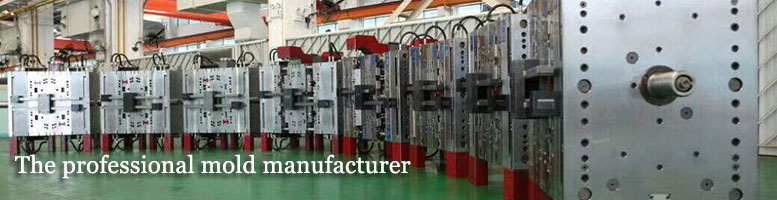
Our professional field covers Multi color injection molding,Mock up sample,Die Casting Mold,Mold standard components,Plastic mold,Plastic injection and others. We strive for excellence in all aspects, especially in short delivery cycles, as we continuously increase our high praise for our employees and processes. The company currently has over 200 employees and annual can produce around 400-600 sets of various plastic injection molds, including office appliances,home appliances,auto parts,medical instruments .
After years of development, we have collaborated with global clients such as Hyundai,FAW-Volkswagen,Samsung,Haier,Media,Canon,HP,Ford,HONDA . We have a solid team with rich experience in industrial design, 3D structural design, tooling production, certificate consulting, project management, QA/QC, and production management.
| Product Name | small batch injection molds |
| Plastic Materials | AS(acrylonitrile-styrene),PUR(polyurethane),PVC(poly vinyl chloride) ,...etc. |
| Standard | ISO9001 |
| Place of Origin | Shenzhen,China |
| Other materials | Rubber, Slilconce rubber, LSR,Aluminum, Zinc,Copper...Metal...etc. |
| Quality | RoSH and SGS standard |
| Feature | Non marking and Non flash |
| Size | According to your 2D, 3D Drawing |
| Packaging Size: | 200 * 164 * 188 Please consult us for specific details |
| Package | Standard exported Wooden box packed, Fumigation process(upon required) |
| Mold Building Lead Time | 4 - 5 weeks, Part measurement report (upon required) |
| Export region | Europe,Oceania,Africa |
| Export Country | Belize,Bulgaria,British Virgin Islands,Svalbard, ...etc. |
| Surface treatment | Polish. Etched. Texture |
| Experience | 15 years experience in plastic injection mold making and plastic parts produce. |
| Mould making technology | 3D Modelling,Plastic flow/deform simulation...etc. |
| Hot/ Cold Runner | HUSKY, INCOE, YDDO, HASCO, DME, MoldMaster, Masterflow, Mastip...etc. |
| Mould Life | 300000 Shots. (According to your working environment.) |
| Equipments | Grinding machine,Stamping equipment,CNC,EDM ,Milling machine,Wire Cuting Machine...etc. |
| Lead time (days) | To be negotiated |
GoodBo Mould is one of the leading small batch injection molds manufacturers in China, and our mission is to provide customers with high-quality products and the highest quality service.
At GoodBo Mould we fully test all molds in-house. Trial reports and process data are provided to the client for rapid start up and all clients can be assured of tight quality control that guarantees a quality product. Mold trial run samples will be provided together with inspection reports.
We offer clients a wide range of materials to meet their product specifications, including the following:TPE(thermoplastic),AS(acrylonitrile-styrene),PE(polyethylene),PC(polycarbonate),PP(polypropylene),HDPE(high density polyethylene),PETP(poly ethylene terephthalate),PPS(poly phenylene sulfide),CA(cellulose acetate),GPS(general polystyrene),PPO(poly phenylene oxide),PBTP(poly butylene terephthalate),POM(polyformaldehyde),PMMA(poly methyl methacrylate),ABS(acrylonitrile-butadiene-styrene copolymer), etc.
small batch injection molds---FAQs Guide
2.What should be taken into consideration when selecting a small batch injection molds for a certain application?
3.What kind of coatings are used for small batch injection molds surfaces to reduce wear and tear?
4.What are the common types of small batch injection molds used for metal alloys?
5.What types of finishes can be applied to small batch injection molds?
6.What techniques are used to remove excess material from a small batch injection molds during the moulding process?
7.What safety precautions should be taken when using small batch injection molds?
8.What kind of lubricants are used to reduce small batch injection molds friction?
9.How do small batch injection molds hardness and mould flexibility affect its performance?
10.What is the significance of angle control in small batch injection molds?
11.What is the difference between cast and machined small batch injection molds?
12.How can a small batch injection molds be corrosion-resistant?
13.What type of runner and gate systems are incorporated into the small batch injection molds design?
14.How to make a mould?
15.How is the surface of a small batch injection molds treated to improve its performance?
1.What type of part ejection system does the small batch injection molds use, and how does it ensure smooth ejection without defects?
We focus on providing high quality small batch injection molds products and services.The type of part ejection system used in a mold depends on the type of mold and the complexity of the part being molded. Generally, the most common type of part ejection system is a mechanical ejector system, which uses pins, blades, or other mechanical components to push the part out of the mold. This system ensures smooth ejection without defects by providing a consistent force to the part, which prevents it from sticking to the mold or becoming damaged during the ejection process. Additionally, the ejector system can be adjusted to provide the optimal amount of force for the part being molded.
2.What should be taken into consideration when selecting a small batch injection molds for a certain application?
Our mission is to provide customers with the best solutions for small batch injection molds.
1. The type of material to be used in the mould.
2. The size and shape of the part to be produced.
3. The complexity of the part design.
4. The production volume required.
5. The type of injection moulding machine to be used.
6. The type of cooling system to be used.
7. The type of ejection system to be used.
8. The type of surface finish required.
9. The cost of the mould.
10. The lead time for the mould.
3.What kind of coatings are used for small batch injection molds surfaces to reduce wear and tear?
Our small batch injection molds products undergo strict quality control to ensure customer satisfaction.Common coatings used for mould surfaces to reduce wear and tear include hard chrome plating, electroless nickel plating, and diamond-like carbon (DLC) coatings. Hard chrome plating is a hard, wear-resistant coating that is applied to the mould surface to reduce friction and wear. Electroless nickel plating is a corrosion-resistant coating that is applied to the mould surface to reduce wear and tear. Diamond-like carbon (DLC) coatings are a type of hard, wear-resistant coating that is applied to the mould surface to reduce friction and wear.

4.What are the common types of small batch injection molds used for metal alloys?
We continuously upgrade our skills and knowledge to adapt to changing small batch injection molds market needs.
1. Sand Casting Moulds: Sand casting is one of the most popular and cost-effective methods for producing metal parts and components. Sand casting moulds are made from a mixture of sand, clay, and water. The sand is packed around a pattern of the desired shape, and then the pattern is removed and molten metal is poured into the cavity.
2. Investment Casting Moulds: Investment casting is a process in which a wax pattern is used to create a mould. The wax pattern is then encased in a ceramic shell, which is heated to melt the wax and create a cavity for the molten metal to be poured into.
3. Permanent Moulds: Permanent moulds are made from metal and are used to produce parts with complex shapes and intricate details. The mould is heated and the molten metal is poured into the cavity.
4. Die Casting Moulds: Die casting is a process in which molten metal is forced into a mould under high pressure. The mould is usually made from steel or aluminium and is designed to produce parts with precise dimensions and intricate details.
5.What types of finishes can be applied to small batch injection molds?
We attach importance to the innovation ability and team spirit of employees, have advanced R & D facilities and laboratories, and have a good quality management system.
1. Powder Coating
2. Anodizing
3. Painting
4. Plating
5. Polishing
6. Sandblasting
7. Heat Treating
8. Ceramic Coating
9. Laser Etching
10. Vacuum Metallizing
6.What techniques are used to remove excess material from a small batch injection molds during the moulding process?
We maintain a stable growth through reasonable capital operations, focus on industry development trends and cutting -edge technologies, and focus on product quality and safety performance.
1. Trimming: This is the most common technique used to remove excess material from a mould. It involves using a sharp tool to cut away the excess material.
2. Sanding: This technique involves using sandpaper to sand down the excess material.
3. Grinding: This technique involves using a grinding wheel to grind away the excess material.
4. Drilling: This technique involves using a drill to drill away the excess material.
5. Blasting: This technique involves using a blasting material such as sand or glass beads to blast away the excess material.

7.What safety precautions should be taken when using small batch injection molds?
We pay attention to the transformation of intellectual property protection and innovation achievements. Your OEM or ODM order design we have a complete confidentiality system.
1. Wear protective gloves, goggles, and a face mask when handling moulds.
2. Avoid breathing in mould spores by working in a well-ventilated area.
3. Clean and disinfect moulds before and after use.
4. Avoid contact with skin and eyes.
5. Dispose of moulds properly after use.
6. Store moulds in a dry, cool place away from direct sunlight.
7. Wear long sleeves and pants when working with moulds.
8. Avoid eating or drinking while working with moulds.
9. Wash hands thoroughly after handling moulds.
10. Use a dust mask when sanding or grinding moulds.
8.What kind of lubricants are used to reduce small batch injection molds friction?
We have a good reputation and image in the industry. The quality and price advantage of small batch injection molds products is an important factor in our hard overseas market.Silicone lubricants, graphite lubricants, and PTFE (polytetrafluoroethylene) lubricants are all commonly used to reduce mould friction.
9.How do small batch injection molds hardness and mould flexibility affect its performance?
We pay attention to user experience and product quality, and provide the best product quality and lowest production cost for cooperative customers.Mould hardness and mould flexibility can have a significant impact on the performance of a mould. Harder moulds are more durable and can withstand higher temperatures and pressures, making them ideal for high-volume production. However, they are also more difficult to modify and can be more expensive to produce. On the other hand, softer moulds are more flexible and can be modified more easily, making them ideal for low-volume production. However, they are also more prone to wear and tear and can be less durable.

10.What is the significance of angle control in small batch injection molds?
We have advanced production equipment and technology to meet the needs of customers, and can provide customers with high quality, low priced small batch injection molds products.Angle control in moulds is important for ensuring that the finished product has the desired shape and dimensions. It is also important for controlling the flow of molten material during the injection moulding process. Angle control helps to ensure that the molten material is evenly distributed throughout the mould cavity, which helps to reduce the risk of defects in the finished product. Additionally, angle control helps to reduce the risk of warping and other deformities in the finished product.
11.What is the difference between cast and machined small batch injection molds?
We actively participate in the small batch injection molds industry associations and organization activities. The corporate social responsibility performed well, and the focus of brand building and promotionCast moulds are made by pouring molten metal into a mould cavity, while machined moulds are made by cutting and shaping metal with a machine tool. Cast moulds are typically used for low-volume production, while machined moulds are used for high-volume production. Cast moulds are generally less expensive and faster to produce, while machined moulds are more precise and can produce more complex shapes.
12.How can a small batch injection molds be corrosion-resistant?
We have a wide range of small batch injection molds customer groups and establishes long -term cooperative relationships with partners. The countries we provide services include Lesotho,Congo, Republic of the,Slovenia,Papua New Guinea,Mayotte.Moulds can be made corrosion-resistant by using materials such as stainless steel, aluminum, and other alloys that are resistant to corrosion. Additionally, the moulds can be coated with a corrosion-resistant material such as a paint or a powder coating.

13.What type of runner and gate systems are incorporated into the small batch injection molds design?
We continue to invest in research and development and continue to launch innovative products.The type of runner and gate systems incorporated into the mold design depend on the type of part being molded and the desired outcome. Common runner and gate systems include cold runner systems, hot runner systems, direct gating, edge gating, and valve gating.
14.How to make a mould?
We focus on innovation and continuous improvement to maintain a competitive advantage.
1. Start by gathering the materials you need to make the mould. You will need a container to hold the mould, a material to make the mould from (such as silicone, plaster, or clay), and a release agent (such as petroleum jelly or cooking spray).
2. Prepare the container for the mould. Make sure it is clean and dry, and then apply a release agent to the inside of the container. This will help the mould come out of the container easily when it is finished.
3. Mix the material you are using to make the mould. Follow the instructions on the package for the best results.
4. Pour the mixture into the container and spread it evenly. Make sure to fill the container completely and leave no air pockets.
5. Allow the mould to dry completely. Depending on the material you are using, this could take anywhere from a few hours to a few days.
6. Once the mould is dry, carefully remove it from the container. If necessary, use a knife or other tool to help loosen the edges of the mould.
7. Your mould is now ready to use!
15.How is the surface of a small batch injection molds treated to improve its performance?
We have established a good reputation and reliable partnerships within the small batch injection molds industry.The surface of a mould can be treated in a variety of ways to improve its performance. Common treatments include polishing, sandblasting, shot peening, and coating with a release agent. Polishing the surface of the mould can help reduce friction and improve the mould's ability to release parts. Sandblasting can help remove any imperfections or burrs on the surface of the mould. Shot peening can help increase the surface hardness of the mould and improve its wear resistance. Finally, coating the mould with a release agent can help reduce sticking and improve the mould's ability to release parts.
Tags:oem abs plastic mold,flash injection mold,diskrack plastic mold,clear plastic mold,small run injection mold