
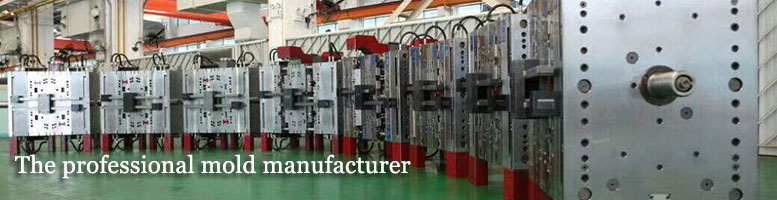
We are very close to Shenzhen airport and port, only a few minutes away. I have been engaged in the manufacturing industry since 1988. The company currently has over 200 employees and produces around 400-600 sets of various plastic injection molds, including office appliances,communicating equipments,home appliances,medical instruments, annually.
GoodBo Mould has a professional management team and adopts a modern horizontal open management model. We provide flexible services, offering small quantities of assembled and precision machined parts. All molds manufactured by GoodBo Mould and formed internally will always be maintained.
| Product Name | runner mold |
| Plastic Materials | PETP(poly ethylene terephthalate),PBTP(poly butylene terephthalate),AS(acrylonitrile-styrene) ,...etc. |
| Standard | ISO9001 |
| Place of Origin | Shenzhen,Guangdong |
| Other materials | Rubber, Slilconce rubber, LSR,Aluminum, Zinc,Copper...Metal...etc. |
| Quality | RoSH and SGS standard |
| Feature | Non marking and Non flash |
| Size | According to your 2D, 3D Drawing |
| Packaging Size: | 241 * 160 * 184 Please consult us for specific details |
| Package | Standard exported Wooden box packed, Fumigation process(upon required) |
| Mold Building Lead Time | 4 - 5 weeks, Part measurement report (upon required) |
| Export region | Africa,Europe |
| Export Country | Saudi Arabia,Nepal,Lithuania,Iraq, ...etc. |
| Surface treatment | Polish. Etched. Texture |
| Experience | 15 years experience in plastic injection mold making and plastic parts produce. |
| Mould making technology | CNC Programming,3D Modelling...etc. |
| Hot/ Cold Runner | HUSKY, INCOE, YDDO, HASCO, DME, MoldMaster, Masterflow, Mastip...etc. |
| Mould Life | 350000 Shots. (According to your working environment.) |
| Equipments | EDM ,CMM,Stamping equipment,CNC,Grinding machine,Wire Cuting Machine...etc. |
| Lead time (days) | To be negotiated |
GoodBo Mould is one of the leading runner mold manufacturers in China, and our mission is to provide customers with high-quality products and the highest quality service.
We believe quality begins with mould design capability and consider it to be the key to successful mould making. So at GoodBo Mould, every mould designers will do the integrated engineering analysis from start to enable the high quality.
Our engineering and mold making technology include:SolidWorks(3D Modelling),Pro/Engineer(3D Modelling),AutoCad(2D Modelling),MasterCam(CNC Programming),etc.
runner mold---FAQs Guide
2.What type of runner and gate systems are incorporated into the runner mold design?
3.In what ways can runner mold cooling be improved?
4.How does shrinkage of the material being moulded affect the finished product?
5.Does the runner mold support multi-cavity configurations for simultaneous production of multiple units?
6.What kind of coatings are used for runner mold surfaces to reduce wear and tear?
7.What materials are usually used to make runner mold?
8.About the scale of runner mold factory
9.What is the difference between cast and machined runner mold?
10.What techniques are used to remove excess material from a runner mold during the moulding process?
1.What kind of lubricants are used to reduce runner mold friction?
We have a good reputation and image in the industry. The quality and price advantage of runner mold products is an important factor in our hard overseas market.Silicone lubricants, graphite lubricants, and PTFE (polytetrafluoroethylene) lubricants are all commonly used to reduce mould friction.
2.What type of runner and gate systems are incorporated into the runner mold design?
We continue to invest in research and development and continue to launch innovative products.The type of runner and gate systems incorporated into the mold design depend on the type of part being molded and the desired outcome. Common runner and gate systems include cold runner systems, hot runner systems, direct gating, edge gating, and valve gating.
3.In what ways can runner mold cooling be improved?
We enjoy high authority and influence in the industry and continue to innovate products and service models.
1. Increase air circulation: Increasing air circulation in the area where the mold is cooling can help to reduce the temperature of the mold more quickly.
2. Use a cooling system: Installing a cooling system such as a water-cooled chiller can help to reduce the temperature of the mold more quickly and efficiently.
3. Use a fan: Installing a fan in the area where the mold is cooling can help to circulate the air and reduce the temperature of the mold more quickly.
4. Use a heat exchanger: Installing a heat exchanger in the area where the mold is cooling can help to transfer the heat away from the mold more quickly.
5. Use a cooling spray: Applying a cooling spray to the mold can help to reduce the temperature of the mold more quickly.
6. Use a cooling blanket: Wrapping a cooling blanket around the mold can help to reduce the temperature of the mold more quickly.

4.How does shrinkage of the material being moulded affect the finished product?
We have rich industry experience and professional knowledge, and have strong competitiveness in the market.Shrinkage of the material being moulded can affect the finished product in a variety of ways. If the material shrinks too much, it can cause warping, cracking, or other deformities in the finished product. It can also cause the product to be smaller than expected, or to have a different shape than intended. Additionally, shrinkage can cause the product to have a different surface finish than expected, or to have a different color than intended.
5.Does the runner mold support multi-cavity configurations for simultaneous production of multiple units?
We have broad development space in domestic and foreign markets. runner mold have great advantages in terms of price, quality, and delivery date.Yes, many molds are designed to support multi-cavity configurations for simultaneous production of multiple units.
6.What kind of coatings are used for runner mold surfaces to reduce wear and tear?
Our runner mold products undergo strict quality control to ensure customer satisfaction.Common coatings used for mould surfaces to reduce wear and tear include hard chrome plating, electroless nickel plating, and diamond-like carbon (DLC) coatings. Hard chrome plating is a hard, wear-resistant coating that is applied to the mould surface to reduce friction and wear. Electroless nickel plating is a corrosion-resistant coating that is applied to the mould surface to reduce wear and tear. Diamond-like carbon (DLC) coatings are a type of hard, wear-resistant coating that is applied to the mould surface to reduce friction and wear.

7.What materials are usually used to make runner mold?
We have established long-term and stable partnerships with our suppliers, so we have great advantages in price and cost and quality assurance.Moulds are typically made from metal, plastic, rubber, silicone, or plaster.
8.About the scale of runner mold factory
Our company currently has over 200 employees and produces around 400-600 sets of various plastic injection molds annually.
9.What is the difference between cast and machined runner mold?
We actively participate in the runner mold industry associations and organization activities. The corporate social responsibility performed well, and the focus of brand building and promotionCast moulds are made by pouring molten metal into a mould cavity, while machined moulds are made by cutting and shaping metal with a machine tool. Cast moulds are typically used for low-volume production, while machined moulds are used for high-volume production. Cast moulds are generally less expensive and faster to produce, while machined moulds are more precise and can produce more complex shapes.

10.What techniques are used to remove excess material from a runner mold during the moulding process?
We maintain a stable growth through reasonable capital operations, focus on industry development trends and cutting -edge technologies, and focus on product quality and safety performance.
1. Trimming: This is the most common technique used to remove excess material from a mould. It involves using a sharp tool to cut away the excess material.
2. Sanding: This technique involves using sandpaper to sand down the excess material.
3. Grinding: This technique involves using a grinding wheel to grind away the excess material.
4. Drilling: This technique involves using a drill to drill away the excess material.
5. Blasting: This technique involves using a blasting material such as sand or glass beads to blast away the excess material.
Tags:peek injection mold,oem pvc injection mold,hot runner injection molds,plastic part moulds,acetone plastic mold,polystyrene injection molds,2k injection molds