
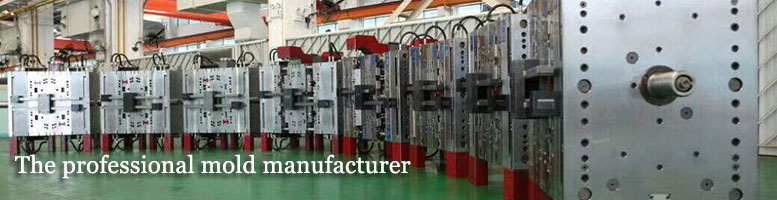
Our factory is located in Shenzhen, the famous "manufacturing capital" of China. Having a professional management team and adopting a modern horizontal open management model. We define quality as the overall customer satisfaction and actively promote standardization of components and management. GoodBo Mould has global customers such as Ford,Media,FAW-Volkswagen,HP,Sony,KONKA,Samsung,Canon,Haier,Hyundai. We believe that "high quality comes from every detail", which is why we win customer loyalty. We welcome you to explore various possibilities.
| Product name | reaction injection molds |
| Place of Origin | Shenzhen,China |
| Runner | Cold Runner. Hot Runner: Yudo |
| Port | Shenzhen |
| Colors | Customized Colors |
| Condition | New |
| Design software | CAD/PROE/UG/3D/STEP/PDF/JPG |
| Packing Size(cm) | 186*122*188 Specific consultation with us |
| Brand Name | GoodBo Mould |
| Export region | America,Europe,Oceania |
| Export country | America,Europe,Oceania...etc |
| Mould life | 500000 shots |
| Certification | ISO90001 |
| Product Material | PPO(poly phenylene oxide),PETP(poly ethylene terephthalate),ABS(acrylonitrile-butadiene-styrene copolymer)...etc. |
| Mould making technology | CNC Programming,Plastic flow/deform simulation...etc. |
| Application | Marine,FMCG,Aerospace...etc. |
| After-sales Service | Always maintained |
| MOQ | Negotiable |
| Packaging Details | Packed in cartons |
| Supply Ability | 2000-100000 Set/Sets per Month (See specific model products) |
| Lead time (days) | 20-40 (To be negotiated) |
| Mould Base | LKM,HASCO... |
GoodBo Mould is one of the leading reaction injection molds manufacturers in China, and our mission is to provide customers with high-quality products and the highest quality service.
We believe quality begins with mould design capability and consider it to be the key to successful mould making. So at GoodBo Mould, every mould designers will do the integrated engineering analysis from start to enable the high quality.
Our engineering and mold making technology include:MasterCam(CNC Programming),SolidWorks(3D Modelling),AutoCad(2D Modelling),Pro/Engineer(3D Modelling),etc.
reaction injection molds---FAQs Guide
2.How is the surface of a reaction injection molds treated to improve its performance?
3.What are the most important features of a reaction injection molds?
4.Is the reaction injection molds adaptable to different injection molding machines?
5.Does the reaction injection molds support multi-cavity configurations for simultaneous production of multiple units?
6.What is the difference between cast and machined reaction injection molds?
7.What type of steel is normally used for a reaction injection molds?
8.What is the difference between an injection mould and a compression reaction injection molds?
9.What is the size of the reaction injection molds cavity and how does it affect the moulding process?
10.What types of machines are needed to produce a reaction injection molds?
11.About reaction injection molds production equipment
12.How do reaction injection molds help to reduce production costs?
13.What safety precautions should be taken when using reaction injection molds?
14.About reaction injection molds,which materials do you support?
15.How does shrinkage of the material being moulded affect the finished product?
1.About reaction injection molds delivery time
3-4 weeks for the 1st.artical. Lead time for plastic mold manufacturing depends on the complexity of the mold and the size of the order.
2.How is the surface of a reaction injection molds treated to improve its performance?
We have established a good reputation and reliable partnerships within the reaction injection molds industry.The surface of a mould can be treated in a variety of ways to improve its performance. Common treatments include polishing, sandblasting, shot peening, and coating with a release agent. Polishing the surface of the mould can help reduce friction and improve the mould's ability to release parts. Sandblasting can help remove any imperfections or burrs on the surface of the mould. Shot peening can help increase the surface hardness of the mould and improve its wear resistance. Finally, coating the mould with a release agent can help reduce sticking and improve the mould's ability to release parts.
3.What are the most important features of a reaction injection molds?
We continue to improve reaction injection molds products and processes to improve efficiency.
1. Durability: The mould should be able to withstand the high temperatures and pressures of the injection moulding process.
2. Precision: The mould should be able to produce parts with a high degree of accuracy and repeatability.
3. Surface Finish: The mould should be able to produce parts with a smooth, consistent surface finish.
4. Ease of Maintenance: The mould should be easy to maintain and repair.
5. Cost: The mould should be cost-effective to produce and maintain.
4.Is the reaction injection molds adaptable to different injection molding machines?
We are committed to providing personalized solutions and established long -term strategic cooperative relationships with customers.Yes, the mold can be adapted to different injection molding machines. Depending on the type of mold and the complexity of the part, some modifications may be necessary.
5.Does the reaction injection molds support multi-cavity configurations for simultaneous production of multiple units?
We have broad development space in domestic and foreign markets. reaction injection molds have great advantages in terms of price, quality, and delivery date.Yes, many molds are designed to support multi-cavity configurations for simultaneous production of multiple units.
6.What is the difference between cast and machined reaction injection molds?
We actively participate in the reaction injection molds industry associations and organization activities. The corporate social responsibility performed well, and the focus of brand building and promotionCast moulds are made by pouring molten metal into a mould cavity, while machined moulds are made by cutting and shaping metal with a machine tool. Cast moulds are typically used for low-volume production, while machined moulds are used for high-volume production. Cast moulds are generally less expensive and faster to produce, while machined moulds are more precise and can produce more complex shapes.
7.What type of steel is normally used for a reaction injection molds?
We focus on our customers' needs and strive to meet their expectations, so we take this very seriously.
Tool steel is typically used for moulds. Common types of tool steel include high-speed steel, hot-work steel, cold-work steel, shock-resistant steel, and plastic mould steel.
8.What is the difference between an injection mould and a compression reaction injection molds?
We have been working hard to improve service quality and meet customer needs.An injection mould is a tool used to produce plastic parts by injecting molten material into a mould cavity. The molten material is injected under pressure and cooled to form the desired shape. A compression mould is a tool used to produce plastic parts by pressing a preheated plastic material into a mould cavity. The material is then cooled and hardened to form the desired shape. The main difference between an injection mould and a compression mould is the way in which the molten material is introduced into the mould cavity.
9.What is the size of the reaction injection molds cavity and how does it affect the moulding process?
We should perform well in market competition, and the prices of reaction injection molds products have a great competitive advantage.The size of the mould cavity is determined by the size of the part being moulded. The size of the mould cavity affects the moulding process in several ways.
Firstly, it affects the amount of material that can be injected into the mould, which in turn affects the cycle time and the amount of material used.
Secondly, the size of the mould cavity affects the cooling time of the part, which affects the part's dimensional accuracy and surface finish.
Finally, the size of the mould cavity affects the pressure and speed of the injection process, which can affect the part's strength and durability.
10.What types of machines are needed to produce a reaction injection molds?
Our company has many years of reaction injection molds experience and expertise.The types of machines needed to produce a mould depend on the type of mould being produced. Generally, machines such as CNC milling machines, lathes, grinders, and EDM machines are used to produce moulds. In addition, injection moulding machines may be used to produce plastic moulds.

11.About reaction injection molds production equipment
Our mold processing equipment mainly includes stamping equipment, CNC machining equipment, electrical discharge machining equipment, wire cutting machines, plasma cutting machines, lathes, milling machines, grinders, drilling machines, and casting equipment.
12.How do reaction injection molds help to reduce production costs?
reaction injection molds is not a product only, but also can help you comes to money-making.Moulds can help to reduce production costs by reducing the amount of time and labour required to produce a product. Moulds can be used to create multiple identical parts quickly and efficiently, eliminating the need for manual labour and reducing the amount of time needed to produce a product. Additionally, moulds can be used to create complex shapes and designs that would be difficult or impossible to create by hand, reducing the need for expensive custom tooling.
13.What safety precautions should be taken when using reaction injection molds?
We pay attention to the transformation of intellectual property protection and innovation achievements. Your OEM or ODM order design we have a complete confidentiality system.
1. Wear protective gloves, goggles, and a face mask when handling moulds.
2. Avoid breathing in mould spores by working in a well-ventilated area.
3. Clean and disinfect moulds before and after use.
4. Avoid contact with skin and eyes.
5. Dispose of moulds properly after use.
6. Store moulds in a dry, cool place away from direct sunlight.
7. Wear long sleeves and pants when working with moulds.
8. Avoid eating or drinking while working with moulds.
9. Wash hands thoroughly after handling moulds.
10. Use a dust mask when sanding or grinding moulds.
14.About reaction injection molds,which materials do you support?
We offer clients a wide range of materials:ABS(acrylonitrile-butadiene-styrene copolymer), CA(cellulose acetate), AS(acrylonitrile-styrene), GPS(general polystyrene), HDPE(high density polyethylene), LDPE(low density polyethylene), PA(polyamide), PBTP(poly butylene terephthalate), PC(polycarbonate), PE(polyethylene), PETP(poly ethylene terephthalate), PMMA(poly methyl methacrylate), POM(polyformaldehyde), PP(polypropylene),PPO(poly phenylene oxide), PPS(poly phenylene sulfide), PUR(polyurethane), PVC(poly vinyl chloride), TPE(thermoplastic), etc.
15.How does shrinkage of the material being moulded affect the finished product?
We have rich industry experience and professional knowledge, and have strong competitiveness in the market.Shrinkage of the material being moulded can affect the finished product in a variety of ways. If the material shrinks too much, it can cause warping, cracking, or other deformities in the finished product. It can also cause the product to be smaller than expected, or to have a different shape than intended. Additionally, shrinkage can cause the product to have a different surface finish than expected, or to have a different color than intended.

Tags:purchasing black plastic mold,china custom injection mold,automotive plastic injection mold,china thin wall injection molds,bmb injection molding