
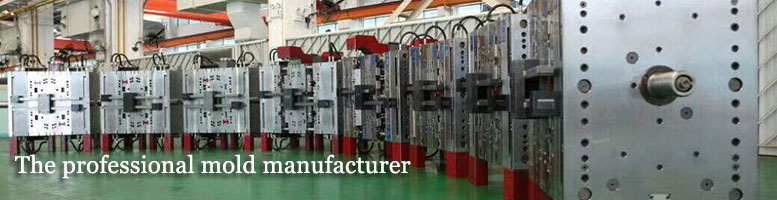
The company currently has over 200 employees and produces around 400-600 sets of various plastic injection molds, including auto parts,communicating equipments,medical instruments,office appliances, annually. The cohesion of the team reflects excellent quality and service. We firmly believe in adhering to the basic principles of quality, service, and innovation. We believe that "high quality comes from every detail", which is why we win customer loyalty. We welcome you to explore various possibilities.
| Product name | prototype injection mold |
| Place of Origin | Shenzhen,Guangdong |
| Runner | Cold Runner. Hot Runner: Yudo |
| Port | Shenzhen |
| Colors | Customized Colors |
| Condition | New |
| Design software | CAD/PROE/UG/3D/STEP/PDF/JPG |
| Packing Size(cm) | 246*137*243 Specific consultation with us |
| Brand Name | GoodBo Mould |
| Export region | Asia,Oceania |
| Export country | Asia,Oceania...etc |
| Mould life | 500000 shots |
| Certification | ISO90001 |
| Product Material | PP(polypropylene),PC(polycarbonate),PE(polyethylene)...etc. |
| Mould making technology | 2D Modelling,Plastic flow/deform simulation...etc. |
| Application | Medical,Automotive,White Goods...etc. |
| After-sales Service | Always maintained |
| MOQ | Negotiable |
| Packaging Details | Packed in cartons |
| Supply Ability | 2000-100000 Set/Sets per Month (See specific model products) |
| Lead time (days) | 20-40 (To be negotiated) |
| Mould Base | LKM,HASCO... |
GoodBo Mould is one of the leading prototype injection mold manufacturers in China, and our mission is to provide customers with high-quality products and the highest quality service.
Excellent and adequate processing equipments, and normalized and efficient production management are the guarantee for mould quality and delivery.
GoodBo Mould continuous investment in our mold making facilities has kept the company at the forefront of quality injection mold making. Backed up by our experienced mold maker and management personnel, our philosophy is: DO IT RIGHT THE FIRST TIME, EVERY TIME. 24-hours operations to meet your needs,Manufacture of both simple and complex molds and molding parts,Short lead-time,Complete In-House Mold-Making Facilities,etc.
prototype injection mold---FAQs Guide
2.What are the most important features of a prototype injection mold?
3.What type of runner and gate systems are incorporated into the prototype injection mold design?
4.What is the difference between high-pressure and low-pressure prototype injection mold?
5.What is the significance of angle control in prototype injection mold?
6.What technologies are used to produce higher quality prototype injection mold?
7.How does the prototype injection mold contribute to cost-effectiveness in terms of production efficiency and material utilization?
8.What factors affect the lifespan of a prototype injection mold?
9.What type of steel is normally used for a prototype injection mold?
10.What kind of coatings are used for prototype injection mold surfaces to reduce wear and tear?
1.what is injection moulding?
We pay attention to the introduction and training of talents, scientifically regulate the management system, and focus on cultural construction and team cohesion.
Injection moulding is a manufacturing process for producing parts by injecting molten material into a mould. It is most commonly used in mass-production processes where the same part is being created thousands or even millions of times in succession. The process involves melting the material, injecting it into a mould, and then cooling it so that it hardens into the desired shape.
2.What are the most important features of a prototype injection mold?
We continue to improve prototype injection mold products and processes to improve efficiency.
1. Durability: The mould should be able to withstand the high temperatures and pressures of the injection moulding process.
2. Precision: The mould should be able to produce parts with a high degree of accuracy and repeatability.
3. Surface Finish: The mould should be able to produce parts with a smooth, consistent surface finish.
4. Ease of Maintenance: The mould should be easy to maintain and repair.
5. Cost: The mould should be cost-effective to produce and maintain.
3.What type of runner and gate systems are incorporated into the prototype injection mold design?
We continue to invest in research and development and continue to launch innovative products.The type of runner and gate systems incorporated into the mold design depend on the type of part being molded and the desired outcome. Common runner and gate systems include cold runner systems, hot runner systems, direct gating, edge gating, and valve gating.

4.What is the difference between high-pressure and low-pressure prototype injection mold?
We focus on teamwork and communication to achieve common goals, We attach great importance to this detail.High-pressure moulds are used to create parts with complex shapes and intricate details, while low-pressure moulds are used to create parts with simpler shapes and fewer details. High-pressure moulds require more pressure to form the parts, while low-pressure moulds require less pressure. High-pressure moulds are more expensive and require more time to create the parts, while low-pressure moulds are less expensive and require less time.
5.What is the significance of angle control in prototype injection mold?
We have advanced production equipment and technology to meet the needs of customers, and can provide customers with high quality, low priced prototype injection mold products.Angle control in moulds is important for ensuring that the finished product has the desired shape and dimensions. It is also important for controlling the flow of molten material during the injection moulding process. Angle control helps to ensure that the molten material is evenly distributed throughout the mould cavity, which helps to reduce the risk of defects in the finished product. Additionally, angle control helps to reduce the risk of warping and other deformities in the finished product.
6.What technologies are used to produce higher quality prototype injection mold?
We pay attention to employee development and benefits, and provide a good working environment in order to improve the efficiency of employees and improve the quality management of prototype injection mold products.
1. Computer Numerical Control (CNC) Machining: CNC machining is a process that uses computer-controlled machines to cut and shape materials into precise shapes and sizes. This technology is used to produce higher quality moulds with greater accuracy and repeatability.
2. 3D Printing: 3D printing is a process that uses a digital model to create a physical object. This technology is used to produce complex moulds with intricate details and shapes.
3. Laser Cutting: Laser cutting is a process that uses a laser beam to cut and shape materials into precise shapes and sizes. This technology is used to produce higher quality moulds with greater accuracy and repeatability.
4. Vacuum Forming: Vacuum forming is a process that uses a vacuum to form plastic sheets into desired shapes. This technology is used to produce higher quality moulds with greater accuracy and repeatability.
5. Injection Moulding: Injection moulding is a process that uses a heated plastic material to form a desired shape. This technology is used to produce higher quality moulds with greater accuracy and repeatability.

7.How does the prototype injection mold contribute to cost-effectiveness in terms of production efficiency and material utilization?
Being one of the top prototype injection mold manufacturers in China, We attach great importance to this detail.Molds are used to create parts and components with a high degree of accuracy and repeatability. This helps to reduce waste and increase production efficiency. The use of molds also allows for the efficient use of materials, as the same mold can be used to create multiple parts with the same shape and size. This reduces the amount of material needed to produce a given number of parts, resulting in cost savings. Additionally, molds can be designed to reduce the amount of time needed to produce a part, further increasing production efficiency and cost-effectiveness.
8.What factors affect the lifespan of a prototype injection mold?
We are centered on customers and always pay attention to customers' needs for prototype injection mold products.
1. Temperature: Temperature can affect the growth and survival of moulds. Generally, moulds grow best in warm, damp environments. High temperatures can kill some moulds, while low temperatures can slow down their growth.
2. Humidity: High humidity levels can promote the growth of moulds, while low humidity levels can inhibit their growth.
3. Light: Moulds need light to grow, so exposure to light can affect their lifespan.
4. Airflow: Poor air circulation can create an environment that is conducive to mould growth.
5. Nutrients: Moulds need nutrients to survive, so the availability of nutrients can affect their lifespan.
6. pH: The pH of the environment can affect the growth of moulds. Generally, moulds prefer slightly acidic environments.
9.What type of steel is normally used for a prototype injection mold?
We focus on our customers' needs and strive to meet their expectations, so we take this very seriously.
Tool steel is typically used for moulds. Common types of tool steel include high-speed steel, hot-work steel, cold-work steel, shock-resistant steel, and plastic mould steel.

10.What kind of coatings are used for prototype injection mold surfaces to reduce wear and tear?
Our prototype injection mold products undergo strict quality control to ensure customer satisfaction.Common coatings used for mould surfaces to reduce wear and tear include hard chrome plating, electroless nickel plating, and diamond-like carbon (DLC) coatings. Hard chrome plating is a hard, wear-resistant coating that is applied to the mould surface to reduce friction and wear. Electroless nickel plating is a corrosion-resistant coating that is applied to the mould surface to reduce wear and tear. Diamond-like carbon (DLC) coatings are a type of hard, wear-resistant coating that is applied to the mould surface to reduce friction and wear.
Tags:large plastic mould,polycarbonate injection molds,maximum wall thickness injection molds,plastic insert mold,plastic moulds pa,precision injection mould,injection molding