
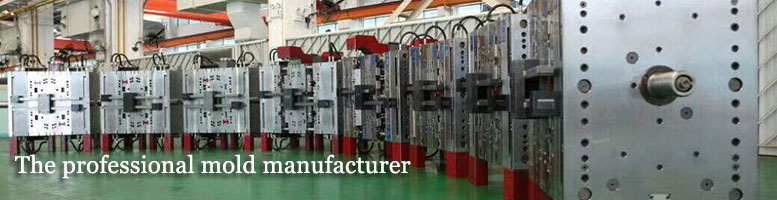
Our factory has technical personnel with years of experience in production technology management. The first-class technical facilities and high-quality raw materials ensure the quality of products and reasonable prices. We provide you with the advantage of low cost, as well as the high engineering and production standards expected by the injection molding industry in Europe, North America, and Japan, as well as some large domestic enterprises. GoodBo Mould has global customers such as Canon,HP,Sony,Nissan,Hyundai,Ford,KONKA,Samsung,FAW-Volkswagen,HONDA. Welcome OEM orders.
| Product name | polypropylene injection molds |
| Place of Origin | Shenzhen,Guangdong |
| Runner | Cold Runner. Hot Runner: Yudo |
| Port | Shenzhen |
| Colors | Customized Colors |
| Condition | New |
| Design software | CAD/PROE/UG/3D/STEP/PDF/JPG |
| Packing Size(cm) | 172*102*166 Specific consultation with us |
| Brand Name | GoodBo Mould |
| Export region | America,Oceania,Europe |
| Export country | America,Oceania,Europe...etc |
| Mould life | 450000 shots |
| Certification | ISO90001 |
| Product Material | PBTP(poly butylene terephthalate),TPE(thermoplastic),POM(polyformaldehyde)...etc. |
| Mould making technology | CNC Programming,3D Modelling...etc. |
| Application | Medical,Architectural,Marine...etc. |
| After-sales Service | Always maintained |
| MOQ | Negotiable |
| Packaging Details | Packed in cartons |
| Supply Ability | 2000-100000 Set/Sets per Month (See specific model products) |
| Lead time (days) | 20-40 (To be negotiated) |
| Mould Base | LKM,HASCO... |
GoodBo Mould is one of the leading polypropylene injection molds manufacturers in China, and our mission is to provide customers with high-quality products and the highest quality service.
At GoodBo Mould we have invested in both people and technology to ensure that our designs meet your highest expectations. Our experienced mold designers utilize the latest software to directly take the clients CAD model into design. All mold designs are then validated to our clients tooling standards and molding specifications.
Our engineering and mold making technology include:Pro/Engineer(3D Modelling),MasterCam(CNC Programming),Moldflow Mold Advisor(Plastic flow/deform simulation),SolidWorks(3D Modelling),etc.
polypropylene injection molds---FAQs Guide
2.What kind of coatings are used for polypropylene injection molds surfaces to reduce wear and tear?
3.What are the advantages and disadvantages of using a 3D printed polypropylene injection molds?
4.How do polypropylene injection molds help to reduce production costs?
5.How does the polypropylene injection molds contribute to achieving a desired surface finish on the molded products?
6.Is the polypropylene injection molds designed for easy customization to meet specific product requirements?
7.What is the significance of angle control in polypropylene injection molds?
8.What is the production capacity of the factory for polypropylene injection molds?
9.What types of finishes can be applied to polypropylene injection molds?
10.Does the polypropylene injection molds support multi-cavity configurations for simultaneous production of multiple units?
11.Are there any special solutions for making polypropylene injection molds with deep walls or complex shapes?
12.What type of cooling system is integrated into the polypropylene injection molds, and how efficiently does it dissipate heat?
1.About polypropylene injection molds,which materials do you support?
We offer clients a wide range of materials:ABS(acrylonitrile-butadiene-styrene copolymer), CA(cellulose acetate), AS(acrylonitrile-styrene), GPS(general polystyrene), HDPE(high density polyethylene), LDPE(low density polyethylene), PA(polyamide), PBTP(poly butylene terephthalate), PC(polycarbonate), PE(polyethylene), PETP(poly ethylene terephthalate), PMMA(poly methyl methacrylate), POM(polyformaldehyde), PP(polypropylene),PPO(poly phenylene oxide), PPS(poly phenylene sulfide), PUR(polyurethane), PVC(poly vinyl chloride), TPE(thermoplastic), etc.
2.What kind of coatings are used for polypropylene injection molds surfaces to reduce wear and tear?
Our polypropylene injection molds products undergo strict quality control to ensure customer satisfaction.Common coatings used for mould surfaces to reduce wear and tear include hard chrome plating, electroless nickel plating, and diamond-like carbon (DLC) coatings. Hard chrome plating is a hard, wear-resistant coating that is applied to the mould surface to reduce friction and wear. Electroless nickel plating is a corrosion-resistant coating that is applied to the mould surface to reduce wear and tear. Diamond-like carbon (DLC) coatings are a type of hard, wear-resistant coating that is applied to the mould surface to reduce friction and wear.
3.What are the advantages and disadvantages of using a 3D printed polypropylene injection molds?
We should enjoy a good reputation in the industry, and we can increase the added value of the products of cooperative customers through technological innovation.Advantages:
1. Cost-Effective: 3D printed moulds are much cheaper than traditional moulds, making them a great option for small businesses and startups.
2. Quick Turnaround: 3D printed moulds can be produced quickly, allowing for faster product development and prototyping.
3. Versatility: 3D printed moulds can be used to create complex shapes and designs that would be difficult to achieve with traditional moulds.
4. Customization: 3D printed moulds can be customized to fit specific needs, allowing for greater flexibility in product design.
Disadvantages:
1. Limited Durability: 3D printed moulds are not as durable as traditional moulds and may not be able to withstand the same level of wear and tear.
2. Limited Materials: 3D printed moulds are limited to the materials that can be used in the printing process, which may not be suitable for certain applications.
3. Limited Accuracy: 3D printed moulds may not be as accurate as traditional moulds, which can lead to imperfections in the finished product.
4. Limited Finishes: 3D printed moulds may not be able to achieve the same level of finish as traditional moulds, which can affect the overall quality of the product.
4.How do polypropylene injection molds help to reduce production costs?
polypropylene injection molds is not a product only, but also can help you comes to money-making.Moulds can help to reduce production costs by reducing the amount of time and labour required to produce a product. Moulds can be used to create multiple identical parts quickly and efficiently, eliminating the need for manual labour and reducing the amount of time needed to produce a product. Additionally, moulds can be used to create complex shapes and designs that would be difficult or impossible to create by hand, reducing the need for expensive custom tooling.
5.How does the polypropylene injection molds contribute to achieving a desired surface finish on the molded products?
We adhere to the principle of integrity and transparency, and establish long -term relationships with partners, and we attach great importance to this detail.The mold contributes to achieving a desired surface finish on the molded products by providing a smooth, uniform surface that can be polished or textured to the desired finish. The mold also helps to ensure that the product is free of any defects or imperfections that could affect the surface finish. Additionally, the mold can be designed to create specific textures or patterns on the surface of the product.

6.Is the polypropylene injection molds designed for easy customization to meet specific product requirements?
We have the leading technology and innovation capabilities, and attach importance to employee training and development, and provide promotion opportunities.Yes, many molds are designed to be easily customized to meet specific product requirements. Depending on the complexity of the product, the mold may need to be modified or completely redesigned to meet the desired specifications.
7.What is the significance of angle control in polypropylene injection molds?
We have advanced production equipment and technology to meet the needs of customers, and can provide customers with high quality, low priced polypropylene injection molds products.Angle control in moulds is important for ensuring that the finished product has the desired shape and dimensions. It is also important for controlling the flow of molten material during the injection moulding process. Angle control helps to ensure that the molten material is evenly distributed throughout the mould cavity, which helps to reduce the risk of defects in the finished product. Additionally, angle control helps to reduce the risk of warping and other deformities in the finished product.
8.What is the production capacity of the factory for polypropylene injection molds?
The annual manufacturing capacity is around 400-600 sets of various plastic injection moulds for parts of auto parts, home appliances, medical instruments, office appliances and communicating equipments, etc.
9.What types of finishes can be applied to polypropylene injection molds?
We attach importance to the innovation ability and team spirit of employees, have advanced R & D facilities and laboratories, and have a good quality management system.
1. Powder Coating
2. Anodizing
3. Painting
4. Plating
5. Polishing
6. Sandblasting
7. Heat Treating
8. Ceramic Coating
9. Laser Etching
10. Vacuum Metallizing
10.Does the polypropylene injection molds support multi-cavity configurations for simultaneous production of multiple units?
We have broad development space in domestic and foreign markets. polypropylene injection molds have great advantages in terms of price, quality, and delivery date.Yes, many molds are designed to support multi-cavity configurations for simultaneous production of multiple units.

11.Are there any special solutions for making polypropylene injection molds with deep walls or complex shapes?
Our products & services cover a wide range of areas and meet the needs of different fields.Yes, there are several special solutions for making molds with deep walls or complex shapes. These include using a CNC machining process, 3D printing, vacuum forming, and injection molding. Each of these processes has its own advantages and disadvantages, so it is important to consider the specific requirements of the project before deciding which process is best.
12.What type of cooling system is integrated into the polypropylene injection molds, and how efficiently does it dissipate heat?
I have a comprehensive after -sales service system, which can pay attention to market trends in time and adjust our strategy in a timely manner.The type of cooling system integrated into the mold depends on the specific mold design and the materials used. Generally, cooling systems are designed to dissipate heat as efficiently as possible, using a combination of water, air, and/or oil to cool the mold. The efficiency of the cooling system depends on the size and complexity of the mold, as well as the materials used.
Tags:dental injection mold,plastic cap moulds,reinforced reaction injection mold,bendable plastic mould,silicone injection molds,small plastic mould