
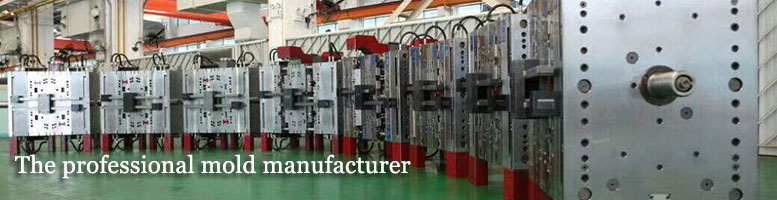
Our factory is located in Shenzhen, the famous "manufacturing capital" of China. Having a professional management team and adopting a modern horizontal open management model. We define quality as the overall customer satisfaction and actively promote standardization of components and management. GoodBo Mould has global customers such as Hyundai,FAW-Volkswagen,Canon,Haier,HONDA,Samsung,Ford,KONKA,HP,Sony. We believe that "high quality comes from every detail", which is why we win customer loyalty. We welcome you to explore various possibilities.
| Product name | plastic rubber mold |
| Place of Origin | Shenzhen,Guangdong |
| Runner | Cold Runner. Hot Runner: Yudo |
| Port | Shenzhen |
| Colors | Customized Colors |
| Condition | New |
| Design software | CAD/PROE/UG/3D/STEP/PDF/JPG |
| Packing Size(cm) | 228*150*238 Specific consultation with us |
| Brand Name | GoodBo Mould |
| Export region | America,Europe |
| Export country | America,Europe...etc |
| Mould life | 500000 shots |
| Certification | ISO90001 |
| Product Material | PPS(poly phenylene sulfide),PMMA(poly methyl methacrylate),ABS(acrylonitrile-butadiene-styrene copolymer)...etc. |
| Mould making technology | Plastic flow/deform simulation,3D Modelling...etc. |
| Application | White Goods,Marine,Medical...etc. |
| After-sales Service | Always maintained |
| MOQ | Negotiable |
| Packaging Details | Packed in cartons |
| Supply Ability | 2000-100000 Set/Sets per Month (See specific model products) |
| Lead time (days) | 20-40 (To be negotiated) |
| Mould Base | LKM,HASCO... |
GoodBo Mould is one of the leading plastic rubber mold manufacturers in China, and our mission is to provide customers with high-quality products and the highest quality service.
Excellent and adequate processing equipments, and normalized and efficient production management are the guarantee for mould quality and delivery.
GoodBo Mould continuous investment in our mold making facilities has kept the company at the forefront of quality injection mold making. Backed up by our experienced mold maker and management personnel, our philosophy is: DO IT RIGHT THE FIRST TIME, EVERY TIME. Manufacture of both simple and complex molds and molding parts,Get design approval before cutting steel ,Short lead-time,24-hours operations to meet your needs,etc.
plastic rubber mold---FAQs Guide
2.What kind of lubricants are used to reduce plastic rubber mold friction?
3.What are the after-sales services available for plastic rubber mold?
4.Is the plastic rubber mold adaptable to different injection molding machines?
5.What are the common types of plastic rubber mold used for metal alloys?
6.In what ways can plastic rubber mold cooling be improved?
7.What are the advantages and disadvantages of plastic rubber mold made from aluminium?
8.What types of machines are needed to produce a plastic rubber mold?
9.What is the difference between high-pressure and low-pressure plastic rubber mold?
10.Are there any special solutions for making plastic rubber mold with deep walls or complex shapes?
11.How does the plastic rubber mold contribute to achieving a desired surface finish on the molded products?
12.What are the advantages and disadvantages of using a 3D printed plastic rubber mold?
13.What type of part ejection system does the plastic rubber mold use, and how does it ensure smooth ejection without defects?
14.what is injection moulding?
1.How do plastic rubber mold help to reduce production costs?
plastic rubber mold is not a product only, but also can help you comes to money-making.Moulds can help to reduce production costs by reducing the amount of time and labour required to produce a product. Moulds can be used to create multiple identical parts quickly and efficiently, eliminating the need for manual labour and reducing the amount of time needed to produce a product. Additionally, moulds can be used to create complex shapes and designs that would be difficult or impossible to create by hand, reducing the need for expensive custom tooling.
2.What kind of lubricants are used to reduce plastic rubber mold friction?
We have a good reputation and image in the industry. The quality and price advantage of plastic rubber mold products is an important factor in our hard overseas market.Silicone lubricants, graphite lubricants, and PTFE (polytetrafluoroethylene) lubricants are all commonly used to reduce mould friction.

3.What are the after-sales services available for plastic rubber mold?
GoodBo Mould uses a integrated approach to establish the best process for the manufacturing of your product. Once the production is in place we use web-based communication, design and file transfer tools that streamline every step processing and fulfilling the project.All project management teams communicate in English.
4.Is the plastic rubber mold adaptable to different injection molding machines?
We are committed to providing personalized solutions and established long -term strategic cooperative relationships with customers.Yes, the mold can be adapted to different injection molding machines. Depending on the type of mold and the complexity of the part, some modifications may be necessary.

5.What are the common types of plastic rubber mold used for metal alloys?
We continuously upgrade our skills and knowledge to adapt to changing plastic rubber mold market needs.
1. Sand Casting Moulds: Sand casting is one of the most popular and cost-effective methods for producing metal parts and components. Sand casting moulds are made from a mixture of sand, clay, and water. The sand is packed around a pattern of the desired shape, and then the pattern is removed and molten metal is poured into the cavity.
2. Investment Casting Moulds: Investment casting is a process in which a wax pattern is used to create a mould. The wax pattern is then encased in a ceramic shell, which is heated to melt the wax and create a cavity for the molten metal to be poured into.
3. Permanent Moulds: Permanent moulds are made from metal and are used to produce parts with complex shapes and intricate details. The mould is heated and the molten metal is poured into the cavity.
4. Die Casting Moulds: Die casting is a process in which molten metal is forced into a mould under high pressure. The mould is usually made from steel or aluminium and is designed to produce parts with precise dimensions and intricate details.
6.In what ways can plastic rubber mold cooling be improved?
We enjoy high authority and influence in the industry and continue to innovate products and service models.
1. Increase air circulation: Increasing air circulation in the area where the mold is cooling can help to reduce the temperature of the mold more quickly.
2. Use a cooling system: Installing a cooling system such as a water-cooled chiller can help to reduce the temperature of the mold more quickly and efficiently.
3. Use a fan: Installing a fan in the area where the mold is cooling can help to circulate the air and reduce the temperature of the mold more quickly.
4. Use a heat exchanger: Installing a heat exchanger in the area where the mold is cooling can help to transfer the heat away from the mold more quickly.
5. Use a cooling spray: Applying a cooling spray to the mold can help to reduce the temperature of the mold more quickly.
6. Use a cooling blanket: Wrapping a cooling blanket around the mold can help to reduce the temperature of the mold more quickly.

7.What are the advantages and disadvantages of plastic rubber mold made from aluminium?
We are a new plastic rubber mold manufacturer.
Advantages:
1. Aluminium is lightweight and strong, making it ideal for creating intricate moulds.
2. Aluminium is a good conductor of heat, which makes it ideal for use in casting processes.
3. Aluminium is corrosion-resistant, making it a great choice for moulds that will be used in wet or humid environments.
4. Aluminium is relatively inexpensive compared to other metals, making it a cost-effective choice for moulds.
Disadvantages:
1. Aluminium is not as strong as other metals, making it more prone to wear and tear.
2. Aluminium is not as durable as other metals, making it more susceptible to damage from heat and pressure.
3. Aluminium is not as easy to work with as other metals, making it more difficult to create intricate moulds.
4. Aluminium is not as resistant to corrosion as other metals, making it more prone to rusting.
8.What types of machines are needed to produce a plastic rubber mold?
Our company has many years of plastic rubber mold experience and expertise.The types of machines needed to produce a mould depend on the type of mould being produced. Generally, machines such as CNC milling machines, lathes, grinders, and EDM machines are used to produce moulds. In addition, injection moulding machines may be used to produce plastic moulds.

9.What is the difference between high-pressure and low-pressure plastic rubber mold?
We focus on teamwork and communication to achieve common goals, We attach great importance to this detail.High-pressure moulds are used to create parts with complex shapes and intricate details, while low-pressure moulds are used to create parts with simpler shapes and fewer details. High-pressure moulds require more pressure to form the parts, while low-pressure moulds require less pressure. High-pressure moulds are more expensive and require more time to create the parts, while low-pressure moulds are less expensive and require less time.
10.Are there any special solutions for making plastic rubber mold with deep walls or complex shapes?
Our products & services cover a wide range of areas and meet the needs of different fields.Yes, there are several special solutions for making molds with deep walls or complex shapes. These include using a CNC machining process, 3D printing, vacuum forming, and injection molding. Each of these processes has its own advantages and disadvantages, so it is important to consider the specific requirements of the project before deciding which process is best.

11.How does the plastic rubber mold contribute to achieving a desired surface finish on the molded products?
We adhere to the principle of integrity and transparency, and establish long -term relationships with partners, and we attach great importance to this detail.The mold contributes to achieving a desired surface finish on the molded products by providing a smooth, uniform surface that can be polished or textured to the desired finish. The mold also helps to ensure that the product is free of any defects or imperfections that could affect the surface finish. Additionally, the mold can be designed to create specific textures or patterns on the surface of the product.
12.What are the advantages and disadvantages of using a 3D printed plastic rubber mold?
We should enjoy a good reputation in the industry, and we can increase the added value of the products of cooperative customers through technological innovation.Advantages:
1. Cost-Effective: 3D printed moulds are much cheaper than traditional moulds, making them a great option for small businesses and startups.
2. Quick Turnaround: 3D printed moulds can be produced quickly, allowing for faster product development and prototyping.
3. Versatility: 3D printed moulds can be used to create complex shapes and designs that would be difficult to achieve with traditional moulds.
4. Customization: 3D printed moulds can be customized to fit specific needs, allowing for greater flexibility in product design.
Disadvantages:
1. Limited Durability: 3D printed moulds are not as durable as traditional moulds and may not be able to withstand the same level of wear and tear.
2. Limited Materials: 3D printed moulds are limited to the materials that can be used in the printing process, which may not be suitable for certain applications.
3. Limited Accuracy: 3D printed moulds may not be as accurate as traditional moulds, which can lead to imperfections in the finished product.
4. Limited Finishes: 3D printed moulds may not be able to achieve the same level of finish as traditional moulds, which can affect the overall quality of the product.
13.What type of part ejection system does the plastic rubber mold use, and how does it ensure smooth ejection without defects?
We focus on providing high quality plastic rubber mold products and services.The type of part ejection system used in a mold depends on the type of mold and the complexity of the part being molded. Generally, the most common type of part ejection system is a mechanical ejector system, which uses pins, blades, or other mechanical components to push the part out of the mold. This system ensures smooth ejection without defects by providing a consistent force to the part, which prevents it from sticking to the mold or becoming damaged during the ejection process. Additionally, the ejector system can be adjusted to provide the optimal amount of force for the part being molded.
14.what is injection moulding?
We pay attention to the introduction and training of talents, scientifically regulate the management system, and focus on cultural construction and team cohesion.
Injection moulding is a manufacturing process for producing parts by injecting molten material into a mould. It is most commonly used in mass-production processes where the same part is being created thousands or even millions of times in succession. The process involves melting the material, injecting it into a mould, and then cooling it so that it hardens into the desired shape.

Tags:plastic cover mould,ppe plastic molding,imc injection molding,hot runner plastic pet preform mould,tpe injection molds,cutom plastic mold