
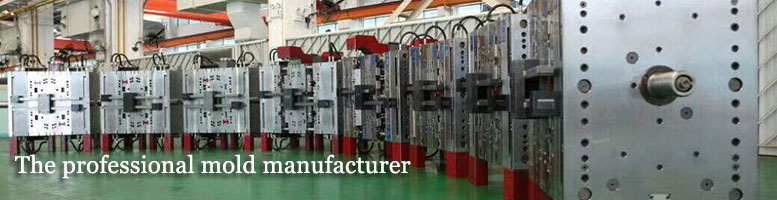
We are very close to Shenzhen airport and port, only a few minutes away. I have been engaged in the manufacturing industry since 1988. The company currently has over 200 employees and produces around 400-600 sets of various plastic injection molds, including communicating equipments,auto parts,office appliances,medical instruments, annually.
GoodBo Mould has a professional management team and adopts a modern horizontal open management model. We provide flexible services, offering small quantities of assembled and precision machined parts. All molds manufactured by GoodBo Mould and formed internally will always be maintained.
| Product name | plastic mold exporter |
| Place of Origin | Shenzhen,China |
| Runner | Cold Runner. Hot Runner: Yudo |
| Port | Shenzhen |
| Colors | Customized Colors |
| Condition | New |
| Design software | CAD/PROE/UG/3D/STEP/PDF/JPG |
| Packing Size(cm) | 157*175*177 Specific consultation with us |
| Brand Name | GoodBo Mould |
| Export region | Europe,America,Africa |
| Export country | Europe,America,Africa...etc |
| Mould life | 300000 shots |
| Certification | ISO90001 |
| Product Material | PVC(poly vinyl chloride),PPS(poly phenylene sulfide),LDPE(low density polyethylene)...etc. |
| Mould making technology | 3D Modelling,Plastic flow/deform simulation...etc. |
| Application | Automotive,Aerospace,Defence...etc. |
| After-sales Service | Always maintained |
| MOQ | Negotiable |
| Packaging Details | Packed in cartons |
| Supply Ability | 2000-100000 Set/Sets per Month (See specific model products) |
| Lead time (days) | 20-40 (To be negotiated) |
| Mould Base | LKM,HASCO... |
GoodBo Mould is one of the leading plastic mold exporter manufacturers in China, and our mission is to provide customers with high-quality products and the highest quality service.
At GoodBo Mould we have invested in both people and technology to ensure that our designs meet your highest expectations. Our experienced mold designers utilize the latest software to directly take the clients CAD model into design. All mold designs are then validated to our clients tooling standards and molding specifications.
Our engineering and mold making technology include:Moldflow Mold Advisor(Plastic flow/deform simulation),SolidWorks(3D Modelling),AutoCad(2D Modelling),MasterCam(CNC Programming),etc.
plastic mold exporter---FAQs Guide
2.How is the surface of a plastic mold exporter treated to improve its performance?
3.What is the significance of angle control in plastic mold exporter?
4.What types of machines are needed to produce a plastic mold exporter?
5.What are the common types of plastic mold exporter used for metal alloys?
6.How important is the accuracy of a plastic mold exporter?
7.What is the difference between high-pressure and low-pressure plastic mold exporter?
8.What materials are usually used to make plastic mold exporter?
9.What type of part ejection system does the plastic mold exporter use, and how does it ensure smooth ejection without defects?
10.What are the after-sales services available for plastic mold exporter?
11.what is injection moulding?
12.what is mould?
13.What are the advantages and disadvantages of plastic mold exporter made from aluminium?
14.Are there automated features integrated into the plastic mold exporter to streamline the manufacturing process?
15.How does the quality of a plastic mold exporter affect its production speed?
1.What type of cooling system is integrated into the plastic mold exporter, and how efficiently does it dissipate heat?
I have a comprehensive after -sales service system, which can pay attention to market trends in time and adjust our strategy in a timely manner.The type of cooling system integrated into the mold depends on the specific mold design and the materials used. Generally, cooling systems are designed to dissipate heat as efficiently as possible, using a combination of water, air, and/or oil to cool the mold. The efficiency of the cooling system depends on the size and complexity of the mold, as well as the materials used.
2.How is the surface of a plastic mold exporter treated to improve its performance?
We have established a good reputation and reliable partnerships within the plastic mold exporter industry.The surface of a mould can be treated in a variety of ways to improve its performance. Common treatments include polishing, sandblasting, shot peening, and coating with a release agent. Polishing the surface of the mould can help reduce friction and improve the mould's ability to release parts. Sandblasting can help remove any imperfections or burrs on the surface of the mould. Shot peening can help increase the surface hardness of the mould and improve its wear resistance. Finally, coating the mould with a release agent can help reduce sticking and improve the mould's ability to release parts.
3.What is the significance of angle control in plastic mold exporter?
We have advanced production equipment and technology to meet the needs of customers, and can provide customers with high quality, low priced plastic mold exporter products.Angle control in moulds is important for ensuring that the finished product has the desired shape and dimensions. It is also important for controlling the flow of molten material during the injection moulding process. Angle control helps to ensure that the molten material is evenly distributed throughout the mould cavity, which helps to reduce the risk of defects in the finished product. Additionally, angle control helps to reduce the risk of warping and other deformities in the finished product.
4.What types of machines are needed to produce a plastic mold exporter?
Our company has many years of plastic mold exporter experience and expertise.The types of machines needed to produce a mould depend on the type of mould being produced. Generally, machines such as CNC milling machines, lathes, grinders, and EDM machines are used to produce moulds. In addition, injection moulding machines may be used to produce plastic moulds.

5.What are the common types of plastic mold exporter used for metal alloys?
We continuously upgrade our skills and knowledge to adapt to changing plastic mold exporter market needs.
1. Sand Casting Moulds: Sand casting is one of the most popular and cost-effective methods for producing metal parts and components. Sand casting moulds are made from a mixture of sand, clay, and water. The sand is packed around a pattern of the desired shape, and then the pattern is removed and molten metal is poured into the cavity.
2. Investment Casting Moulds: Investment casting is a process in which a wax pattern is used to create a mould. The wax pattern is then encased in a ceramic shell, which is heated to melt the wax and create a cavity for the molten metal to be poured into.
3. Permanent Moulds: Permanent moulds are made from metal and are used to produce parts with complex shapes and intricate details. The mould is heated and the molten metal is poured into the cavity.
4. Die Casting Moulds: Die casting is a process in which molten metal is forced into a mould under high pressure. The mould is usually made from steel or aluminium and is designed to produce parts with precise dimensions and intricate details.
6.How important is the accuracy of a plastic mold exporter?
We operate our plastic mold exporter business with integrity and honesty.The accuracy of a mould is extremely important, as it directly affects the quality of the finished product. If the mould is not accurate, the product may not fit together properly, or may not have the desired shape or size. In addition, if the mould is not accurate, it can lead to defects in the finished product, such as warping, cracking, or other imperfections.
7.What is the difference between high-pressure and low-pressure plastic mold exporter?
We focus on teamwork and communication to achieve common goals, We attach great importance to this detail.High-pressure moulds are used to create parts with complex shapes and intricate details, while low-pressure moulds are used to create parts with simpler shapes and fewer details. High-pressure moulds require more pressure to form the parts, while low-pressure moulds require less pressure. High-pressure moulds are more expensive and require more time to create the parts, while low-pressure moulds are less expensive and require less time.
8.What materials are usually used to make plastic mold exporter?
We have established long-term and stable partnerships with our suppliers, so we have great advantages in price and cost and quality assurance.Moulds are typically made from metal, plastic, rubber, silicone, or plaster.

9.What type of part ejection system does the plastic mold exporter use, and how does it ensure smooth ejection without defects?
We focus on providing high quality plastic mold exporter products and services.The type of part ejection system used in a mold depends on the type of mold and the complexity of the part being molded. Generally, the most common type of part ejection system is a mechanical ejector system, which uses pins, blades, or other mechanical components to push the part out of the mold. This system ensures smooth ejection without defects by providing a consistent force to the part, which prevents it from sticking to the mold or becoming damaged during the ejection process. Additionally, the ejector system can be adjusted to provide the optimal amount of force for the part being molded.
10.What are the after-sales services available for plastic mold exporter?
GoodBo Mould uses a integrated approach to establish the best process for the manufacturing of your product. Once the production is in place we use web-based communication, design and file transfer tools that streamline every step processing and fulfilling the project.All project management teams communicate in English.
11.what is injection moulding?
We pay attention to the introduction and training of talents, scientifically regulate the management system, and focus on cultural construction and team cohesion.
Injection moulding is a manufacturing process for producing parts by injecting molten material into a mould. It is most commonly used in mass-production processes where the same part is being created thousands or even millions of times in succession. The process involves melting the material, injecting it into a mould, and then cooling it so that it hardens into the desired shape.
12.what is mould?
We have flexible production capacity. Whether you are large orders or small orders, you can produce and release goods in a timely manner to meet customer needs.
Mould is a type of fungus that grows in damp, warm environments. It can appear as a fuzzy or slimy substance on walls, ceilings, and other surfaces. Mould can cause health problems, such as allergies and respiratory issues, and can damage the structure of a building.

13.What are the advantages and disadvantages of plastic mold exporter made from aluminium?
We are a new plastic mold exporter manufacturer.
Advantages:
1. Aluminium is lightweight and strong, making it ideal for creating intricate moulds.
2. Aluminium is a good conductor of heat, which makes it ideal for use in casting processes.
3. Aluminium is corrosion-resistant, making it a great choice for moulds that will be used in wet or humid environments.
4. Aluminium is relatively inexpensive compared to other metals, making it a cost-effective choice for moulds.
Disadvantages:
1. Aluminium is not as strong as other metals, making it more prone to wear and tear.
2. Aluminium is not as durable as other metals, making it more susceptible to damage from heat and pressure.
3. Aluminium is not as easy to work with as other metals, making it more difficult to create intricate moulds.
4. Aluminium is not as resistant to corrosion as other metals, making it more prone to rusting.
14.Are there automated features integrated into the plastic mold exporter to streamline the manufacturing process?
We adhere to the principle of quality first and have a complete production quality management system and quality inspection process.Yes, many molds are designed with automated features to streamline the manufacturing process. These features can include automated injection systems, automated ejection systems, automated temperature control systems, and automated molding cycles.
15.How does the quality of a plastic mold exporter affect its production speed?
As one of the plastic mold exporter market leaders, we are known for innovation and reliability.
The quality of a mould affects its production speed because a higher quality mould will be more precise and have fewer imperfections, which will allow it to produce parts faster and with fewer defects. Poorly made moulds can cause production delays due to imperfections that require additional time to fix or rework. Additionally, higher quality moulds are typically made from higher quality materials, which can also help to increase production speed.
Tags:wire plastic molding,ppe injection molds,ash injection molding,quick turn injection mold,pla injection molding,plastic cap molds in china,panel plastic molding