
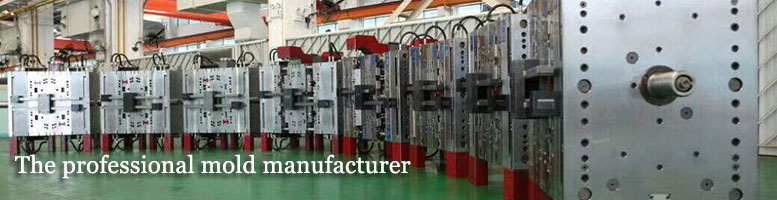
It had been engaged in the manufacturing sector since 1988. Now we totally have more than 200 employees in the plant and the annual manufacturing capacity is around 400-600 sets of various plastic injection moulds for parts of home appliances,communicating equipments,office appliances,auto parts, etc. GoodBo Mould offers you the benefits of lower costs coupled with the high engineering and production standards expected in the European, North American and Japan injection moulding industry as well as some big domestic enterprises.
| Shaping Mode | Injection Mould |
| Place of Origin | China |
| Mould making technology | 3D Modelling,CNC Programming...etc. |
| Product Material | Plastic/Metal |
| Colors | Customized Colors |
| Product Name | plastic inejction mold |
| Mold material | P20/718/738/NAK80/S136 |
| Material | ABS(acrylonitrile-butadiene-styrene copolymer),LDPE(low density polyethylene),PA(polyamide)...etc. |
| Design software | CAD/PROE/UG/3D/DWG/IGS/STEP/PDF/JPG |
| Cavity | Single/Multi Cavity moulds |
| Mould life | 500000 shots |
| Application | Aerospace,Defence,Architectural...etc. |
| Runner | Cold Runner. Hot Runner: Yudo |
| Surface treatment | Polish. Etched. Texture |
| Certification | ISO9001:2015 |
| Size(cm) | 201 * 157 * 280 Please consult us for specific details |
| Packaging Details | 1. injection mold: by pallet or as buyer's request. 2. injection parts: by bags then export carton, or as buyer's request. |
| Export region | Africa,Asia |
| Port | Shenzhen |
| Supply Ability | 3000 Piece/Pieces per Day Please contact the us to check the exact delivery time |
| Samples | Maximum order quantity: 1000 piece Please contact us to confirmation |
GoodBo Mould is one of the leading plastic inejction mold manufacturers in China, and our mission is to provide customers with high-quality products and the highest quality service.
We believe quality begins with mould design capability and consider it to be the key to successful mould making. So at GoodBo Mould, every mould designers will do the integrated engineering analysis from start to enable the high quality.
Our engineering and mold making technology include:SolidWorks(3D Modelling),AutoCad(2D Modelling),Moldflow Mold Advisor(Plastic flow/deform simulation),Pro/Engineer(3D Modelling),etc.
plastic inejction mold---FAQs Guide
2.About the scale of plastic inejction mold factory
3.What types of machines are needed to produce a plastic inejction mold?
4.How does the temperature of a plastic inejction mold affect the moulding process?
5.How does the plastic inejction mold contribute to achieving a desired surface finish on the molded products?
6.what is mould?
7.What is the production capacity of the factory for plastic inejction mold?
8.What processes are involved with the conservation and maintenance of a plastic inejction mold?
9.What are the most important features of a plastic inejction mold?
10.What type of part ejection system does the plastic inejction mold use, and how does it ensure smooth ejection without defects?
11.About plastic inejction mold warranty
1.what is injection moulding?
We pay attention to the introduction and training of talents, scientifically regulate the management system, and focus on cultural construction and team cohesion.
Injection moulding is a manufacturing process for producing parts by injecting molten material into a mould. It is most commonly used in mass-production processes where the same part is being created thousands or even millions of times in succession. The process involves melting the material, injecting it into a mould, and then cooling it so that it hardens into the desired shape.
2.About the scale of plastic inejction mold factory
Our company currently has over 200 employees and produces around 400-600 sets of various plastic injection molds annually.
3.What types of machines are needed to produce a plastic inejction mold?
Our company has many years of plastic inejction mold experience and expertise.The types of machines needed to produce a mould depend on the type of mould being produced. Generally, machines such as CNC milling machines, lathes, grinders, and EDM machines are used to produce moulds. In addition, injection moulding machines may be used to produce plastic moulds.
4.How does the temperature of a plastic inejction mold affect the moulding process?
We have a professional team that is committed to the innovation and development of plastic inejction mold.Temperature is a critical factor in the moulding process. If the mould is too cold, the plastic material will not flow properly and the moulded part will be of poor quality. If the mould is too hot, the plastic material will degrade and the moulded part will be of poor quality. The ideal temperature for the mould depends on the type of plastic material being used. Generally, the mould should be heated to a temperature that is slightly higher than the melting point of the plastic material. This will ensure that the plastic material flows properly and the moulded part has a good finish.
5.How does the plastic inejction mold contribute to achieving a desired surface finish on the molded products?
We adhere to the principle of integrity and transparency, and establish long -term relationships with partners, and we attach great importance to this detail.The mold contributes to achieving a desired surface finish on the molded products by providing a smooth, uniform surface that can be polished or textured to the desired finish. The mold also helps to ensure that the product is free of any defects or imperfections that could affect the surface finish. Additionally, the mold can be designed to create specific textures or patterns on the surface of the product.

6.what is mould?
We have flexible production capacity. Whether you are large orders or small orders, you can produce and release goods in a timely manner to meet customer needs.
Mould is a type of fungus that grows in damp, warm environments. It can appear as a fuzzy or slimy substance on walls, ceilings, and other surfaces. Mould can cause health problems, such as allergies and respiratory issues, and can damage the structure of a building.
7.What is the production capacity of the factory for plastic inejction mold?
The annual manufacturing capacity is around 400-600 sets of various plastic injection moulds for parts of auto parts, home appliances, medical instruments, office appliances and communicating equipments, etc.
8.What processes are involved with the conservation and maintenance of a plastic inejction mold?
We should have a stable supply chain and logistics capabilities, and provide customers with high -quality, low -priced plastic inejction mold products.
1. Cleaning: Moulds should be cleaned regularly to remove any dirt, dust, or debris that may have accumulated on the surface. This can be done with a soft cloth or brush and a mild detergent.
2. Inspection: Inspect the mould for any signs of damage or wear. If any damage is found, it should be repaired or replaced as soon as possible.
3. Lubrication: Moulds should be lubricated regularly to ensure that they are functioning properly and to prevent wear and tear.
4. Storage: Moulds should be stored in a cool, dry place away from direct sunlight and other sources of heat.
5. Maintenance: Regular maintenance should be performed on the mould to ensure that it is functioning properly and to prevent any further damage or wear. This may include replacing worn parts, sharpening cutting edges, and checking for any signs of corrosion.
9.What are the most important features of a plastic inejction mold?
We continue to improve plastic inejction mold products and processes to improve efficiency.
1. Durability: The mould should be able to withstand the high temperatures and pressures of the injection moulding process.
2. Precision: The mould should be able to produce parts with a high degree of accuracy and repeatability.
3. Surface Finish: The mould should be able to produce parts with a smooth, consistent surface finish.
4. Ease of Maintenance: The mould should be easy to maintain and repair.
5. Cost: The mould should be cost-effective to produce and maintain.
10.What type of part ejection system does the plastic inejction mold use, and how does it ensure smooth ejection without defects?
We focus on providing high quality plastic inejction mold products and services.The type of part ejection system used in a mold depends on the type of mold and the complexity of the part being molded. Generally, the most common type of part ejection system is a mechanical ejector system, which uses pins, blades, or other mechanical components to push the part out of the mold. This system ensures smooth ejection without defects by providing a consistent force to the part, which prevents it from sticking to the mold or becoming damaged during the ejection process. Additionally, the ejector system can be adjusted to provide the optimal amount of force for the part being molded.

11.About plastic inejction mold warranty
If the quality is poor, we will provide a 100% refund. Firstly, we will investigate the root cause of the problem and then take measures to prevent it from happening again in the future. This includes changes to mold design, process, or materials used.
Tags:hot runner plastic pet preform mould,injection compression mold,ppe injection molds,plastic trim molds