
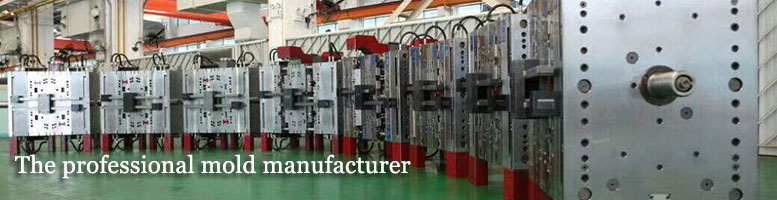
It had been engaged in the manufacturing sector since 1988. Now we totally have more than 200 employees in the plant and the annual manufacturing capacity is around 400-600 sets of various plastic injection moulds for parts of medical instruments,communicating equipments,auto parts,office appliances, etc. GoodBo Mould offers you the benefits of lower costs coupled with the high engineering and production standards expected in the European, North American and Japan injection moulding industry as well as some big domestic enterprises.
| Product Name | plastic enclosure mold |
| Plastic Materials | PE(polyethylene),HDPE(high density polyethylene),PVC(poly vinyl chloride) ,...etc. |
| Standard | ISO9001 |
| Place of Origin | Shenzhen,Guangdong,China |
| Other materials | Rubber, Slilconce rubber, LSR,Aluminum, Zinc,Copper...Metal...etc. |
| Quality | RoSH and SGS standard |
| Feature | Non marking and Non flash |
| Size | According to your 2D, 3D Drawing |
| Packaging Size: | 190 * 101 * 152 Please consult us for specific details |
| Package | Standard exported Wooden box packed, Fumigation process(upon required) |
| Mold Building Lead Time | 4 - 5 weeks, Part measurement report (upon required) |
| Export region | America,Africa |
| Export Country | Lesotho,Bolivia,Poland,Central African Republic, ...etc. |
| Surface treatment | Polish. Etched. Texture |
| Experience | 15 years experience in plastic injection mold making and plastic parts produce. |
| Mould making technology | Plastic flow/deform simulation,3D Modelling...etc. |
| Hot/ Cold Runner | HUSKY, INCOE, YDDO, HASCO, DME, MoldMaster, Masterflow, Mastip...etc. |
| Mould Life | 500000 Shots. (According to your working environment.) |
| Equipments | Grinding machine,CNC,CMM,Wire Cuting Machine,Milling machine...etc. |
| Lead time (days) | To be negotiated |
GoodBo Mould is one of the leading plastic enclosure mold manufacturers in China, and our mission is to provide customers with high-quality products and the highest quality service.
We believe quality begins with mould design capability and consider it to be the key to successful mould making. So at GoodBo Mould, every mould designers will do the integrated engineering analysis from start to enable the high quality.
Our engineering and mold making technology include:MasterCam(CNC Programming),AutoCad(2D Modelling),Pro/Engineer(3D Modelling),Moldflow Mold Advisor(Plastic flow/deform simulation),etc.
plastic enclosure mold---FAQs Guide
2.What is the size of the plastic enclosure mold cavity and how does it affect the moulding process?
3.What kind of cooling systems are used for moulding?
4.How does the temperature of a plastic enclosure mold affect the moulding process?
5.What types of finishes can be applied to plastic enclosure mold?
6.What type of part ejection system does the plastic enclosure mold use, and how does it ensure smooth ejection without defects?
7.How do plastic enclosure mold help to reduce production costs?
8.What kind of coatings are used for plastic enclosure mold surfaces to reduce wear and tear?
9.What type of runner and gate systems are incorporated into the plastic enclosure mold design?
10.About plastic enclosure mold production equipment
1.How is the surface of a plastic enclosure mold treated to improve its performance?
We have established a good reputation and reliable partnerships within the plastic enclosure mold industry.The surface of a mould can be treated in a variety of ways to improve its performance. Common treatments include polishing, sandblasting, shot peening, and coating with a release agent. Polishing the surface of the mould can help reduce friction and improve the mould's ability to release parts. Sandblasting can help remove any imperfections or burrs on the surface of the mould. Shot peening can help increase the surface hardness of the mould and improve its wear resistance. Finally, coating the mould with a release agent can help reduce sticking and improve the mould's ability to release parts.
2.What is the size of the plastic enclosure mold cavity and how does it affect the moulding process?
We should perform well in market competition, and the prices of plastic enclosure mold products have a great competitive advantage.The size of the mould cavity is determined by the size of the part being moulded. The size of the mould cavity affects the moulding process in several ways.
Firstly, it affects the amount of material that can be injected into the mould, which in turn affects the cycle time and the amount of material used.
Secondly, the size of the mould cavity affects the cooling time of the part, which affects the part's dimensional accuracy and surface finish.
Finally, the size of the mould cavity affects the pressure and speed of the injection process, which can affect the part's strength and durability.

3.What kind of cooling systems are used for moulding?
We have advantages in marketing and channel expansion. Suppliers have established good cooperative relations, continuously improved workflows, improved efficiency and productivity, and provided customers with high -quality products and services.The most common cooling systems used for moulding are water cooling systems, air cooling systems, and oil cooling systems. Water cooling systems are the most efficient and cost-effective, as they use a closed-loop system to circulate coolant through the mould to quickly cool the plastic. Air cooling systems use fans to blow air over the mould to cool it, while oil cooling systems use a heat exchanger to transfer heat from the mould to a cooling oil.
4.How does the temperature of a plastic enclosure mold affect the moulding process?
We have a professional team that is committed to the innovation and development of plastic enclosure mold.Temperature is a critical factor in the moulding process. If the mould is too cold, the plastic material will not flow properly and the moulded part will be of poor quality. If the mould is too hot, the plastic material will degrade and the moulded part will be of poor quality. The ideal temperature for the mould depends on the type of plastic material being used. Generally, the mould should be heated to a temperature that is slightly higher than the melting point of the plastic material. This will ensure that the plastic material flows properly and the moulded part has a good finish.

5.What types of finishes can be applied to plastic enclosure mold?
We attach importance to the innovation ability and team spirit of employees, have advanced R & D facilities and laboratories, and have a good quality management system.
1. Powder Coating
2. Anodizing
3. Painting
4. Plating
5. Polishing
6. Sandblasting
7. Heat Treating
8. Ceramic Coating
9. Laser Etching
10. Vacuum Metallizing
6.What type of part ejection system does the plastic enclosure mold use, and how does it ensure smooth ejection without defects?
We focus on providing high quality plastic enclosure mold products and services.The type of part ejection system used in a mold depends on the type of mold and the complexity of the part being molded. Generally, the most common type of part ejection system is a mechanical ejector system, which uses pins, blades, or other mechanical components to push the part out of the mold. This system ensures smooth ejection without defects by providing a consistent force to the part, which prevents it from sticking to the mold or becoming damaged during the ejection process. Additionally, the ejector system can be adjusted to provide the optimal amount of force for the part being molded.

7.How do plastic enclosure mold help to reduce production costs?
plastic enclosure mold is not a product only, but also can help you comes to money-making.Moulds can help to reduce production costs by reducing the amount of time and labour required to produce a product. Moulds can be used to create multiple identical parts quickly and efficiently, eliminating the need for manual labour and reducing the amount of time needed to produce a product. Additionally, moulds can be used to create complex shapes and designs that would be difficult or impossible to create by hand, reducing the need for expensive custom tooling.
8.What kind of coatings are used for plastic enclosure mold surfaces to reduce wear and tear?
Our plastic enclosure mold products undergo strict quality control to ensure customer satisfaction.Common coatings used for mould surfaces to reduce wear and tear include hard chrome plating, electroless nickel plating, and diamond-like carbon (DLC) coatings. Hard chrome plating is a hard, wear-resistant coating that is applied to the mould surface to reduce friction and wear. Electroless nickel plating is a corrosion-resistant coating that is applied to the mould surface to reduce wear and tear. Diamond-like carbon (DLC) coatings are a type of hard, wear-resistant coating that is applied to the mould surface to reduce friction and wear.

9.What type of runner and gate systems are incorporated into the plastic enclosure mold design?
We continue to invest in research and development and continue to launch innovative products.The type of runner and gate systems incorporated into the mold design depend on the type of part being molded and the desired outcome. Common runner and gate systems include cold runner systems, hot runner systems, direct gating, edge gating, and valve gating.
10.About plastic enclosure mold production equipment
Our mold processing equipment mainly includes stamping equipment, CNC machining equipment, electrical discharge machining equipment, wire cutting machines, plasma cutting machines, lathes, milling machines, grinders, drilling machines, and casting equipment.

Tags:china short shot injection molds,4 way injection mold,1000t injection mold,injection mold for electrical engineering