
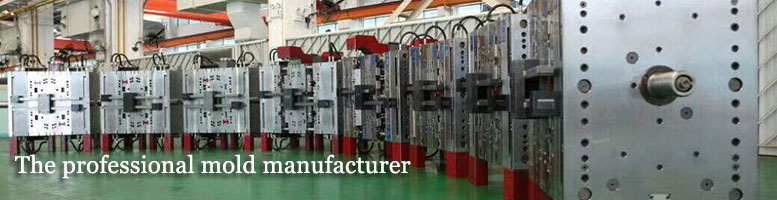
GoodBo Mould offers you the benefits of lower costs coupled with the high engineering and production standards expected in the European, North American and Japan injection moulding industry as well as some big domestic enterprises.We have confidence in our quality, service, and pricing, and we maintain long-term business relationships with customers from countries such as the United States,Honduras,Costa Rica,Singapore,Kazakhstan,Northern Mariana Islands. We have received high praise and recognition from our customers.
| Product name | plastic car part moulds |
| Place of Origin | China |
| Runner | Cold Runner. Hot Runner: Yudo |
| Port | Shenzhen |
| Colors | Customized Colors |
| Condition | New |
| Design software | CAD/PROE/UG/3D/STEP/PDF/JPG |
| Packing Size(cm) | 236*126*170 Specific consultation with us |
| Brand Name | GoodBo Mould |
| Export region | Europe,Asia |
| Export country | Europe,Asia...etc |
| Mould life | 350000 shots |
| Certification | ISO90001 |
| Product Material | PPO(poly phenylene oxide),PMMA(poly methyl methacrylate),HDPE(high density polyethylene)...etc. |
| Mould making technology | 3D Modelling,CNC Programming...etc. |
| Application | Automotive,FMCG,Aerospace...etc. |
| After-sales Service | Always maintained |
| MOQ | Negotiable |
| Packaging Details | Packed in cartons |
| Supply Ability | 2000-100000 Set/Sets per Month (See specific model products) |
| Lead time (days) | 20-40 (To be negotiated) |
| Mould Base | LKM,HASCO... |
GoodBo Mould is one of the leading plastic car part moulds manufacturers in China, and our mission is to provide customers with high-quality products and the highest quality service.
At GoodBo Mould we fully test all molds in-house. Trial reports and process data are provided to the client for rapid start up and all clients can be assured of tight quality control that guarantees a quality product. Mold trial run samples will be provided together with inspection reports.
We offer clients a wide range of materials to meet their product specifications, including the following:CA(cellulose acetate),PPO(poly phenylene oxide),GPS(general polystyrene),TPE(thermoplastic),PETP(poly ethylene terephthalate),LDPE(low density polyethylene),PP(polypropylene),PMMA(poly methyl methacrylate),POM(polyformaldehyde),AS(acrylonitrile-styrene),PC(polycarbonate),PA(polyamide),PPS(poly phenylene sulfide),PVC(poly vinyl chloride),PE(polyethylene), etc.
plastic car part moulds---FAQs Guide
2.How does the plastic car part moulds contribute to cost-effectiveness in terms of production efficiency and material utilization?
3.What are the common types of plastic car part moulds used for metal alloys?
4.What processes are involved with the conservation and maintenance of a plastic car part moulds?
5.Are there any special solutions for making plastic car part moulds with deep walls or complex shapes?
6.About plastic car part moulds warranty
7.Is the plastic car part moulds adaptable to different injection molding machines?
8.What plastic car part moulds maintenance methods can be used to extend the mold’s service life?
9.What is the difference between an injection mould and a compression plastic car part moulds?
10.what is injection moulding?
11.What is the difference between cast and machined plastic car part moulds?
12.What other factors need to be taken into account when designing a plastic car part moulds?
1.What is the production capacity of the factory for plastic car part moulds?
The annual manufacturing capacity is around 400-600 sets of various plastic injection moulds for parts of auto parts, home appliances, medical instruments, office appliances and communicating equipments, etc.
2.How does the plastic car part moulds contribute to cost-effectiveness in terms of production efficiency and material utilization?
Being one of the top plastic car part moulds manufacturers in China, We attach great importance to this detail.Molds are used to create parts and components with a high degree of accuracy and repeatability. This helps to reduce waste and increase production efficiency. The use of molds also allows for the efficient use of materials, as the same mold can be used to create multiple parts with the same shape and size. This reduces the amount of material needed to produce a given number of parts, resulting in cost savings. Additionally, molds can be designed to reduce the amount of time needed to produce a part, further increasing production efficiency and cost-effectiveness.
3.What are the common types of plastic car part moulds used for metal alloys?
We continuously upgrade our skills and knowledge to adapt to changing plastic car part moulds market needs.
1. Sand Casting Moulds: Sand casting is one of the most popular and cost-effective methods for producing metal parts and components. Sand casting moulds are made from a mixture of sand, clay, and water. The sand is packed around a pattern of the desired shape, and then the pattern is removed and molten metal is poured into the cavity.
2. Investment Casting Moulds: Investment casting is a process in which a wax pattern is used to create a mould. The wax pattern is then encased in a ceramic shell, which is heated to melt the wax and create a cavity for the molten metal to be poured into.
3. Permanent Moulds: Permanent moulds are made from metal and are used to produce parts with complex shapes and intricate details. The mould is heated and the molten metal is poured into the cavity.
4. Die Casting Moulds: Die casting is a process in which molten metal is forced into a mould under high pressure. The mould is usually made from steel or aluminium and is designed to produce parts with precise dimensions and intricate details.
4.What processes are involved with the conservation and maintenance of a plastic car part moulds?
We should have a stable supply chain and logistics capabilities, and provide customers with high -quality, low -priced plastic car part moulds products.
1. Cleaning: Moulds should be cleaned regularly to remove any dirt, dust, or debris that may have accumulated on the surface. This can be done with a soft cloth or brush and a mild detergent.
2. Inspection: Inspect the mould for any signs of damage or wear. If any damage is found, it should be repaired or replaced as soon as possible.
3. Lubrication: Moulds should be lubricated regularly to ensure that they are functioning properly and to prevent wear and tear.
4. Storage: Moulds should be stored in a cool, dry place away from direct sunlight and other sources of heat.
5. Maintenance: Regular maintenance should be performed on the mould to ensure that it is functioning properly and to prevent any further damage or wear. This may include replacing worn parts, sharpening cutting edges, and checking for any signs of corrosion.

5.Are there any special solutions for making plastic car part moulds with deep walls or complex shapes?
Our products & services cover a wide range of areas and meet the needs of different fields.Yes, there are several special solutions for making molds with deep walls or complex shapes. These include using a CNC machining process, 3D printing, vacuum forming, and injection molding. Each of these processes has its own advantages and disadvantages, so it is important to consider the specific requirements of the project before deciding which process is best.
6.About plastic car part moulds warranty
If the quality is poor, we will provide a 100% refund. Firstly, we will investigate the root cause of the problem and then take measures to prevent it from happening again in the future. This includes changes to mold design, process, or materials used.
7.Is the plastic car part moulds adaptable to different injection molding machines?
We are committed to providing personalized solutions and established long -term strategic cooperative relationships with customers.Yes, the mold can be adapted to different injection molding machines. Depending on the type of mold and the complexity of the part, some modifications may be necessary.
8.What plastic car part moulds maintenance methods can be used to extend the mold’s service life?
We maintain a certain amount of R&D investment every year and continuously improve operational efficiency to provide better services to our cooperative customers.
1. Clean the mold regularly: Cleaning the mold regularly helps to remove any dirt, dust, or debris that can cause wear and tear on the mold.
2. Lubricate the mold: Lubricating the mold helps to reduce friction and wear on the mold.
3. Inspect the mold: Regularly inspecting the mold for any signs of wear or damage can help to identify any potential problems before they become serious.
4. Repair any damage: If any damage is found, it should be repaired as soon as possible to prevent further damage and extend the life of the mold.
5. Store the mold properly: Storing the mold in a dry, cool place can help to prevent rust and corrosion.

9.What is the difference between an injection mould and a compression plastic car part moulds?
We have been working hard to improve service quality and meet customer needs.An injection mould is a tool used to produce plastic parts by injecting molten material into a mould cavity. The molten material is injected under pressure and cooled to form the desired shape. A compression mould is a tool used to produce plastic parts by pressing a preheated plastic material into a mould cavity. The material is then cooled and hardened to form the desired shape. The main difference between an injection mould and a compression mould is the way in which the molten material is introduced into the mould cavity.
10.what is injection moulding?
We pay attention to the introduction and training of talents, scientifically regulate the management system, and focus on cultural construction and team cohesion.
Injection moulding is a manufacturing process for producing parts by injecting molten material into a mould. It is most commonly used in mass-production processes where the same part is being created thousands or even millions of times in succession. The process involves melting the material, injecting it into a mould, and then cooling it so that it hardens into the desired shape.
11.What is the difference between cast and machined plastic car part moulds?
We actively participate in the plastic car part moulds industry associations and organization activities. The corporate social responsibility performed well, and the focus of brand building and promotionCast moulds are made by pouring molten metal into a mould cavity, while machined moulds are made by cutting and shaping metal with a machine tool. Cast moulds are typically used for low-volume production, while machined moulds are used for high-volume production. Cast moulds are generally less expensive and faster to produce, while machined moulds are more precise and can produce more complex shapes.
12.What other factors need to be taken into account when designing a plastic car part moulds?
We have a first -class management team, and we pay attention to teamwork to achieve common goals.
1. The type of material to be used for the mould: Different materials have different properties and require different mould designs.
2. The size and shape of the part to be produced: The mould must be designed to accommodate the size and shape of the part.
3. The number of cavities: The number of cavities in the mould will affect the design.
4. The type of injection moulding machine to be used: The mould must be designed to fit the injection moulding machine.
5. The type of cooling system to be used: The mould must be designed to accommodate the cooling system.
6. The type of ejection system to be used: The mould must be designed to accommodate the ejection system.
7. The type of surface finish to be achieved: The mould must be designed to achieve the desired surface finish.
8. The type of gate to be used: The mould must be designed to accommodate the gate.
9. The type of runner system to be used: The mould must be designed to accommodate the runner system.
10. The type of venting system to be used: The mould must be designed to accommodate the venting system.

Tags:automotive plastic bumper mold,easteel nylon plastic injection mold,polymer injection molds,plastic injection air conditioner parts mould,nylon plastic injection mold,oem lens injection mold,china precision injection mold