
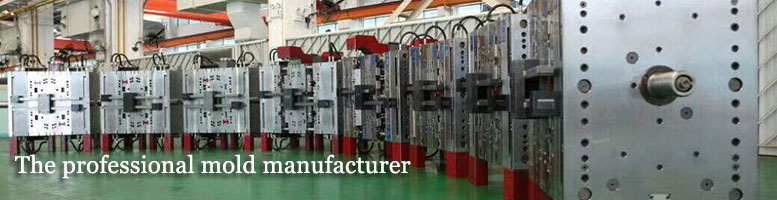
We are very close to Shenzhen airport and port, only a few minutes away. I have been engaged in the manufacturing industry since 1988. The company currently has over 200 employees and produces around 400-600 sets of various plastic injection molds, including medical instruments,communicating equipments,auto parts,home appliances, annually.
GoodBo Mould has a professional management team and adopts a modern horizontal open management model. We provide flexible services, offering small quantities of assembled and precision machined parts. All molds manufactured by GoodBo Mould and formed internally will always be maintained.
| Shaping Mode | Injection Mould |
| Place of Origin | Shenzhen,Guangdong,China |
| Mould making technology | Plastic flow/deform simulation,2D Modelling...etc. |
| Product Material | Plastic/Metal |
| Colors | Customized Colors |
| Product Name | plastic basin mould |
| Mold material | P20/718/738/NAK80/S136 |
| Material | POM(polyformaldehyde),PUR(polyurethane),PE(polyethylene)...etc. |
| Design software | CAD/PROE/UG/3D/DWG/IGS/STEP/PDF/JPG |
| Cavity | Single/Multi Cavity moulds |
| Mould life | 500000 shots |
| Application | Defence,FMCG,Architectural...etc. |
| Runner | Cold Runner. Hot Runner: Yudo |
| Surface treatment | Polish. Etched. Texture |
| Certification | ISO9001:2015 |
| Size(cm) | 227 * 181 * 202 Please consult us for specific details |
| Packaging Details | 1. injection mold: by pallet or as buyer's request. 2. injection parts: by bags then export carton, or as buyer's request. |
| Export region | Oceania,Europe,Africa |
| Port | Shenzhen |
| Supply Ability | 3000 Piece/Pieces per Day Please contact the us to check the exact delivery time |
| Samples | Maximum order quantity: 1000 piece Please contact us to confirmation |
GoodBo Mould is one of the leading plastic basin mould manufacturers in China, and our mission is to provide customers with high-quality products and the highest quality service.
GoodBo Mould appoints a project manager to each individual project and client. The project manager is in charge of the entire project from start to finish providing direct communication for the client. All project management teams communicate in English.
To efficiently manage projects and achieve the required lead time, project manager is appointed to monitor the process of manufacture. Process charts are issued every week via e-mail include digital photographs of the work in progress, creating a real-time tooling progress assessment.
plastic basin mould---FAQs Guide
2.In what ways can plastic basin mould cooling be improved?
3.How does the plastic basin mould contribute to cost-effectiveness in terms of production efficiency and material utilization?
4.What kind of lubricants are used to reduce plastic basin mould friction?
5.What training and support are provided for users working with the plastic basin mould?
6.Does the plastic basin mould support multi-cavity configurations for simultaneous production of multiple units?
7.What is the size of the plastic basin mould cavity and how does it affect the moulding process?
8.How does shrinkage of the material being moulded affect the finished product?
9.What are the common types of plastic basin mould used for metal alloys?
10.What materials are usually used to make plastic basin mould?
11.How important is the accuracy of a plastic basin mould?
12.What factors affect the lifespan of a plastic basin mould?
13.What is the difference between cast and machined plastic basin mould?
14.What type of runner and gate systems are incorporated into the plastic basin mould design?
15.Does the plastic basin mould design comply with industry standards and regulations?
1.What kind of cooling systems are used for moulding?
We have advantages in marketing and channel expansion. Suppliers have established good cooperative relations, continuously improved workflows, improved efficiency and productivity, and provided customers with high -quality products and services.The most common cooling systems used for moulding are water cooling systems, air cooling systems, and oil cooling systems. Water cooling systems are the most efficient and cost-effective, as they use a closed-loop system to circulate coolant through the mould to quickly cool the plastic. Air cooling systems use fans to blow air over the mould to cool it, while oil cooling systems use a heat exchanger to transfer heat from the mould to a cooling oil.
2.In what ways can plastic basin mould cooling be improved?
We enjoy high authority and influence in the industry and continue to innovate products and service models.
1. Increase air circulation: Increasing air circulation in the area where the mold is cooling can help to reduce the temperature of the mold more quickly.
2. Use a cooling system: Installing a cooling system such as a water-cooled chiller can help to reduce the temperature of the mold more quickly and efficiently.
3. Use a fan: Installing a fan in the area where the mold is cooling can help to circulate the air and reduce the temperature of the mold more quickly.
4. Use a heat exchanger: Installing a heat exchanger in the area where the mold is cooling can help to transfer the heat away from the mold more quickly.
5. Use a cooling spray: Applying a cooling spray to the mold can help to reduce the temperature of the mold more quickly.
6. Use a cooling blanket: Wrapping a cooling blanket around the mold can help to reduce the temperature of the mold more quickly.

3.How does the plastic basin mould contribute to cost-effectiveness in terms of production efficiency and material utilization?
Being one of the top plastic basin mould manufacturers in China, We attach great importance to this detail.Molds are used to create parts and components with a high degree of accuracy and repeatability. This helps to reduce waste and increase production efficiency. The use of molds also allows for the efficient use of materials, as the same mold can be used to create multiple parts with the same shape and size. This reduces the amount of material needed to produce a given number of parts, resulting in cost savings. Additionally, molds can be designed to reduce the amount of time needed to produce a part, further increasing production efficiency and cost-effectiveness.
4.What kind of lubricants are used to reduce plastic basin mould friction?
We have a good reputation and image in the industry. The quality and price advantage of plastic basin mould products is an important factor in our hard overseas market.Silicone lubricants, graphite lubricants, and PTFE (polytetrafluoroethylene) lubricants are all commonly used to reduce mould friction.

5.What training and support are provided for users working with the plastic basin mould?
Our plastic basin mould products have competitive and differentiated advantages, and actively promote digital transformation and innovation.Training and support for users working with the mold will vary depending on the manufacturer. Generally, the manufacturer will provide detailed instructions on how to use the mold, as well as safety guidelines. They may also provide technical support and troubleshooting assistance. Additionally, some manufacturers may offer on-site training and support for users.
6.Does the plastic basin mould support multi-cavity configurations for simultaneous production of multiple units?
We have broad development space in domestic and foreign markets. plastic basin mould have great advantages in terms of price, quality, and delivery date.Yes, many molds are designed to support multi-cavity configurations for simultaneous production of multiple units.

7.What is the size of the plastic basin mould cavity and how does it affect the moulding process?
We should perform well in market competition, and the prices of plastic basin mould products have a great competitive advantage.The size of the mould cavity is determined by the size of the part being moulded. The size of the mould cavity affects the moulding process in several ways.
Firstly, it affects the amount of material that can be injected into the mould, which in turn affects the cycle time and the amount of material used.
Secondly, the size of the mould cavity affects the cooling time of the part, which affects the part's dimensional accuracy and surface finish.
Finally, the size of the mould cavity affects the pressure and speed of the injection process, which can affect the part's strength and durability.
8.How does shrinkage of the material being moulded affect the finished product?
We have rich industry experience and professional knowledge, and have strong competitiveness in the market.Shrinkage of the material being moulded can affect the finished product in a variety of ways. If the material shrinks too much, it can cause warping, cracking, or other deformities in the finished product. It can also cause the product to be smaller than expected, or to have a different shape than intended. Additionally, shrinkage can cause the product to have a different surface finish than expected, or to have a different color than intended.

9.What are the common types of plastic basin mould used for metal alloys?
We continuously upgrade our skills and knowledge to adapt to changing plastic basin mould market needs.
1. Sand Casting Moulds: Sand casting is one of the most popular and cost-effective methods for producing metal parts and components. Sand casting moulds are made from a mixture of sand, clay, and water. The sand is packed around a pattern of the desired shape, and then the pattern is removed and molten metal is poured into the cavity.
2. Investment Casting Moulds: Investment casting is a process in which a wax pattern is used to create a mould. The wax pattern is then encased in a ceramic shell, which is heated to melt the wax and create a cavity for the molten metal to be poured into.
3. Permanent Moulds: Permanent moulds are made from metal and are used to produce parts with complex shapes and intricate details. The mould is heated and the molten metal is poured into the cavity.
4. Die Casting Moulds: Die casting is a process in which molten metal is forced into a mould under high pressure. The mould is usually made from steel or aluminium and is designed to produce parts with precise dimensions and intricate details.
10.What materials are usually used to make plastic basin mould?
We have established long-term and stable partnerships with our suppliers, so we have great advantages in price and cost and quality assurance.Moulds are typically made from metal, plastic, rubber, silicone, or plaster.

11.How important is the accuracy of a plastic basin mould?
We operate our plastic basin mould business with integrity and honesty.The accuracy of a mould is extremely important, as it directly affects the quality of the finished product. If the mould is not accurate, the product may not fit together properly, or may not have the desired shape or size. In addition, if the mould is not accurate, it can lead to defects in the finished product, such as warping, cracking, or other imperfections.
12.What factors affect the lifespan of a plastic basin mould?
We are centered on customers and always pay attention to customers' needs for plastic basin mould products.
1. Temperature: Temperature can affect the growth and survival of moulds. Generally, moulds grow best in warm, damp environments. High temperatures can kill some moulds, while low temperatures can slow down their growth.
2. Humidity: High humidity levels can promote the growth of moulds, while low humidity levels can inhibit their growth.
3. Light: Moulds need light to grow, so exposure to light can affect their lifespan.
4. Airflow: Poor air circulation can create an environment that is conducive to mould growth.
5. Nutrients: Moulds need nutrients to survive, so the availability of nutrients can affect their lifespan.
6. pH: The pH of the environment can affect the growth of moulds. Generally, moulds prefer slightly acidic environments.

13.What is the difference between cast and machined plastic basin mould?
We actively participate in the plastic basin mould industry associations and organization activities. The corporate social responsibility performed well, and the focus of brand building and promotionCast moulds are made by pouring molten metal into a mould cavity, while machined moulds are made by cutting and shaping metal with a machine tool. Cast moulds are typically used for low-volume production, while machined moulds are used for high-volume production. Cast moulds are generally less expensive and faster to produce, while machined moulds are more precise and can produce more complex shapes.
14.What type of runner and gate systems are incorporated into the plastic basin mould design?
We continue to invest in research and development and continue to launch innovative products.The type of runner and gate systems incorporated into the mold design depend on the type of part being molded and the desired outcome. Common runner and gate systems include cold runner systems, hot runner systems, direct gating, edge gating, and valve gating.

15.Does the plastic basin mould design comply with industry standards and regulations?
As one of the top plastic basin mould manufacturers in China, we take this very seriously.Yes, the mold design should comply with industry standards and regulations. It is important to ensure that the mold design meets all applicable safety and quality standards.
Tags:epdm injection molds,prototype plastic mold,china injection molds,overmolding injection mold,shrink plastic mold