
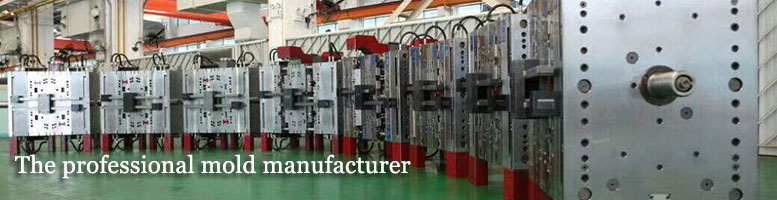
All of our products meet international quality standards and are highly appreciated in various markets around the world. We have over 200 employees and annual produce around 400-600 sets of various plastic injection molds, including communicating equipments,medical instruments,auto parts,office appliances, etc. Our well-equipped facilities and excellent quality control throughout the entire production phase enable us to ensure comprehensive customer satisfaction.
| Shaping Mode | Injection Mould |
| Place of Origin | Shenzhen,China |
| Mould making technology | 3D Modelling,2D Modelling...etc. |
| Product Material | Plastic/Metal |
| Colors | Customized Colors |
| Product Name | moule injection plastique car mould |
| Mold material | P20/718/738/NAK80/S136 |
| Material | PC(polycarbonate),PBTP(poly butylene terephthalate),PPO(poly phenylene oxide)...etc. |
| Design software | CAD/PROE/UG/3D/DWG/IGS/STEP/PDF/JPG |
| Cavity | Single/Multi Cavity moulds |
| Mould life | 300000 shots |
| Application | White Goods,Marine,FMCG...etc. |
| Runner | Cold Runner. Hot Runner: Yudo |
| Surface treatment | Polish. Etched. Texture |
| Certification | ISO9001:2015 |
| Size(cm) | 209 * 149 * 234 Please consult us for specific details |
| Packaging Details | 1. injection mold: by pallet or as buyer's request. 2. injection parts: by bags then export carton, or as buyer's request. |
| Export region | Europe,America,Africa |
| Port | Shenzhen |
| Supply Ability | 3000 Piece/Pieces per Day Please contact the us to check the exact delivery time |
| Samples | Maximum order quantity: 1000 piece Please contact us to confirmation |
GoodBo Mould is one of the leading moule injection plastique car mould manufacturers in China, and our mission is to provide customers with high-quality products and the highest quality service.
GoodBo Mould appoints a project manager to each individual project and client. The project manager is in charge of the entire project from start to finish providing direct communication for the client. All project management teams communicate in English.
To efficiently manage projects and achieve the required lead time, project manager is appointed to monitor the process of manufacture. Process charts are issued every 7 days via e-mail include digital photographs of the work in progress, creating a real-time tooling progress assessment.
moule injection plastique car mould---FAQs Guide
2.What kind of coatings are used for moule injection plastique car mould surfaces to reduce wear and tear?
3.How is the surface of a moule injection plastique car mould treated to improve its performance?
4.What should be taken into consideration when selecting a moule injection plastique car mould for a certain application?
5.How does the moule injection plastique car mould contribute to cost-effectiveness in terms of production efficiency and material utilization?
6.What types of finishes can be applied to moule injection plastique car mould?
7.What are the most important features of a moule injection plastique car mould?
8.In what ways can moule injection plastique car mould cooling be improved?
9.Are there automated features integrated into the moule injection plastique car mould to streamline the manufacturing process?
10.How does shrinkage of the material being moulded affect the finished product?
11.What is the difference between cast and machined moule injection plastique car mould?
12.What safety precautions should be taken when using moule injection plastique car mould?
1.What kind of lubricants are used to reduce moule injection plastique car mould friction?
We have a good reputation and image in the industry. The quality and price advantage of moule injection plastique car mould products is an important factor in our hard overseas market.Silicone lubricants, graphite lubricants, and PTFE (polytetrafluoroethylene) lubricants are all commonly used to reduce mould friction.
2.What kind of coatings are used for moule injection plastique car mould surfaces to reduce wear and tear?
Our moule injection plastique car mould products undergo strict quality control to ensure customer satisfaction.Common coatings used for mould surfaces to reduce wear and tear include hard chrome plating, electroless nickel plating, and diamond-like carbon (DLC) coatings. Hard chrome plating is a hard, wear-resistant coating that is applied to the mould surface to reduce friction and wear. Electroless nickel plating is a corrosion-resistant coating that is applied to the mould surface to reduce wear and tear. Diamond-like carbon (DLC) coatings are a type of hard, wear-resistant coating that is applied to the mould surface to reduce friction and wear.
3.How is the surface of a moule injection plastique car mould treated to improve its performance?
We have established a good reputation and reliable partnerships within the moule injection plastique car mould industry.The surface of a mould can be treated in a variety of ways to improve its performance. Common treatments include polishing, sandblasting, shot peening, and coating with a release agent. Polishing the surface of the mould can help reduce friction and improve the mould's ability to release parts. Sandblasting can help remove any imperfections or burrs on the surface of the mould. Shot peening can help increase the surface hardness of the mould and improve its wear resistance. Finally, coating the mould with a release agent can help reduce sticking and improve the mould's ability to release parts.

4.What should be taken into consideration when selecting a moule injection plastique car mould for a certain application?
Our mission is to provide customers with the best solutions for moule injection plastique car mould.
1. The type of material to be used in the mould.
2. The size and shape of the part to be produced.
3. The complexity of the part design.
4. The production volume required.
5. The type of injection moulding machine to be used.
6. The type of cooling system to be used.
7. The type of ejection system to be used.
8. The type of surface finish required.
9. The cost of the mould.
10. The lead time for the mould.
5.How does the moule injection plastique car mould contribute to cost-effectiveness in terms of production efficiency and material utilization?
Being one of the top moule injection plastique car mould manufacturers in China, We attach great importance to this detail.Molds are used to create parts and components with a high degree of accuracy and repeatability. This helps to reduce waste and increase production efficiency. The use of molds also allows for the efficient use of materials, as the same mold can be used to create multiple parts with the same shape and size. This reduces the amount of material needed to produce a given number of parts, resulting in cost savings. Additionally, molds can be designed to reduce the amount of time needed to produce a part, further increasing production efficiency and cost-effectiveness.
6.What types of finishes can be applied to moule injection plastique car mould?
We attach importance to the innovation ability and team spirit of employees, have advanced R & D facilities and laboratories, and have a good quality management system.
1. Powder Coating
2. Anodizing
3. Painting
4. Plating
5. Polishing
6. Sandblasting
7. Heat Treating
8. Ceramic Coating
9. Laser Etching
10. Vacuum Metallizing

7.What are the most important features of a moule injection plastique car mould?
We continue to improve moule injection plastique car mould products and processes to improve efficiency.
1. Durability: The mould should be able to withstand the high temperatures and pressures of the injection moulding process.
2. Precision: The mould should be able to produce parts with a high degree of accuracy and repeatability.
3. Surface Finish: The mould should be able to produce parts with a smooth, consistent surface finish.
4. Ease of Maintenance: The mould should be easy to maintain and repair.
5. Cost: The mould should be cost-effective to produce and maintain.
8.In what ways can moule injection plastique car mould cooling be improved?
We enjoy high authority and influence in the industry and continue to innovate products and service models.
1. Increase air circulation: Increasing air circulation in the area where the mold is cooling can help to reduce the temperature of the mold more quickly.
2. Use a cooling system: Installing a cooling system such as a water-cooled chiller can help to reduce the temperature of the mold more quickly and efficiently.
3. Use a fan: Installing a fan in the area where the mold is cooling can help to circulate the air and reduce the temperature of the mold more quickly.
4. Use a heat exchanger: Installing a heat exchanger in the area where the mold is cooling can help to transfer the heat away from the mold more quickly.
5. Use a cooling spray: Applying a cooling spray to the mold can help to reduce the temperature of the mold more quickly.
6. Use a cooling blanket: Wrapping a cooling blanket around the mold can help to reduce the temperature of the mold more quickly.
9.Are there automated features integrated into the moule injection plastique car mould to streamline the manufacturing process?
We adhere to the principle of quality first and have a complete production quality management system and quality inspection process.Yes, many molds are designed with automated features to streamline the manufacturing process. These features can include automated injection systems, automated ejection systems, automated temperature control systems, and automated molding cycles.

10.How does shrinkage of the material being moulded affect the finished product?
We have rich industry experience and professional knowledge, and have strong competitiveness in the market.Shrinkage of the material being moulded can affect the finished product in a variety of ways. If the material shrinks too much, it can cause warping, cracking, or other deformities in the finished product. It can also cause the product to be smaller than expected, or to have a different shape than intended. Additionally, shrinkage can cause the product to have a different surface finish than expected, or to have a different color than intended.
11.What is the difference between cast and machined moule injection plastique car mould?
We actively participate in the moule injection plastique car mould industry associations and organization activities. The corporate social responsibility performed well, and the focus of brand building and promotionCast moulds are made by pouring molten metal into a mould cavity, while machined moulds are made by cutting and shaping metal with a machine tool. Cast moulds are typically used for low-volume production, while machined moulds are used for high-volume production. Cast moulds are generally less expensive and faster to produce, while machined moulds are more precise and can produce more complex shapes.
12.What safety precautions should be taken when using moule injection plastique car mould?
We pay attention to the transformation of intellectual property protection and innovation achievements. Your OEM or ODM order design we have a complete confidentiality system.
1. Wear protective gloves, goggles, and a face mask when handling moulds.
2. Avoid breathing in mould spores by working in a well-ventilated area.
3. Clean and disinfect moulds before and after use.
4. Avoid contact with skin and eyes.
5. Dispose of moulds properly after use.
6. Store moulds in a dry, cool place away from direct sunlight.
7. Wear long sleeves and pants when working with moulds.
8. Avoid eating or drinking while working with moulds.
9. Wash hands thoroughly after handling moulds.
10. Use a dust mask when sanding or grinding moulds.

Tags:oem rapid injection mold,tpi injection molding,double injection mold,plastic mold ithaca,industry mold,metal injection molds,ppe plastic molding