
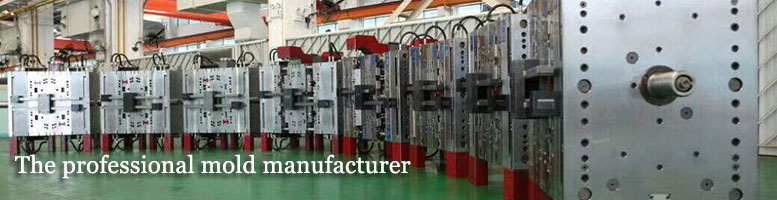
It had been engaged in the manufacturing sector since 1988. Now we totally have more than 200 employees in the plant and the annual manufacturing capacity is around 400-600 sets of various plastic injection moulds for parts of auto parts,communicating equipments,medical instruments,office appliances, etc. GoodBo Mould offers you the benefits of lower costs coupled with the high engineering and production standards expected in the European, North American and Japan injection moulding industry as well as some big domestic enterprises.
| Shaping Mode | Injection Mould |
| Place of Origin | China |
| Mould making technology | CNC Programming,2D Modelling...etc. |
| Product Material | Plastic/Metal |
| Colors | Customized Colors |
| Product Name | liquid plastic mold |
| Mold material | P20/718/738/NAK80/S136 |
| Material | HDPE(high density polyethylene),POM(polyformaldehyde),AS(acrylonitrile-styrene)...etc. |
| Design software | CAD/PROE/UG/3D/DWG/IGS/STEP/PDF/JPG |
| Cavity | Single/Multi Cavity moulds |
| Mould life | 500000 shots |
| Application | Architectural,Defence,FMCG...etc. |
| Runner | Cold Runner. Hot Runner: Yudo |
| Surface treatment | Polish. Etched. Texture |
| Certification | ISO9001:2015 |
| Size(cm) | 212 * 187 * 261 Please consult us for specific details |
| Packaging Details | 1. injection mold: by pallet or as buyer's request. 2. injection parts: by bags then export carton, or as buyer's request. |
| Export region | Oceania,Europe |
| Port | Shenzhen |
| Supply Ability | 3000 Piece/Pieces per Day Please contact the us to check the exact delivery time |
| Samples | Maximum order quantity: 1000 piece Please contact us to confirmation |
GoodBo Mould is one of the leading liquid plastic mold manufacturers in China, and our mission is to provide customers with high-quality products and the highest quality service.
At GoodBo Mould we have invested in both people and technology to ensure that our designs meet your highest expectations. Our experienced mold designers utilize the latest software to directly take the clients CAD model into design. All mold designs are then validated to our clients tooling standards and molding specifications.
Our engineering and mold making technology include:AutoCad(2D Modelling),MasterCam(CNC Programming),Moldflow Mold Advisor(Plastic flow/deform simulation),SolidWorks(3D Modelling),etc.
liquid plastic mold---FAQs Guide
2.What are the common types of liquid plastic mold used for metal alloys?
3.What is the difference between cast and machined liquid plastic mold?
4.Does the liquid plastic mold design comply with industry standards and regulations?
5.what is mould?
6.What kind of coatings are used for liquid plastic mold surfaces to reduce wear and tear?
7.About liquid plastic mold warranty
8.How does the liquid plastic mold contribute to cost-effectiveness in terms of production efficiency and material utilization?
9.About liquid plastic mold quality system
10.What techniques are used to remove excess material from a liquid plastic mold during the moulding process?
1.Is the liquid plastic mold adaptable to different injection molding machines?
We are committed to providing personalized solutions and established long -term strategic cooperative relationships with customers.Yes, the mold can be adapted to different injection molding machines. Depending on the type of mold and the complexity of the part, some modifications may be necessary.
2.What are the common types of liquid plastic mold used for metal alloys?
We continuously upgrade our skills and knowledge to adapt to changing liquid plastic mold market needs.
1. Sand Casting Moulds: Sand casting is one of the most popular and cost-effective methods for producing metal parts and components. Sand casting moulds are made from a mixture of sand, clay, and water. The sand is packed around a pattern of the desired shape, and then the pattern is removed and molten metal is poured into the cavity.
2. Investment Casting Moulds: Investment casting is a process in which a wax pattern is used to create a mould. The wax pattern is then encased in a ceramic shell, which is heated to melt the wax and create a cavity for the molten metal to be poured into.
3. Permanent Moulds: Permanent moulds are made from metal and are used to produce parts with complex shapes and intricate details. The mould is heated and the molten metal is poured into the cavity.
4. Die Casting Moulds: Die casting is a process in which molten metal is forced into a mould under high pressure. The mould is usually made from steel or aluminium and is designed to produce parts with precise dimensions and intricate details.
3.What is the difference between cast and machined liquid plastic mold?
We actively participate in the liquid plastic mold industry associations and organization activities. The corporate social responsibility performed well, and the focus of brand building and promotionCast moulds are made by pouring molten metal into a mould cavity, while machined moulds are made by cutting and shaping metal with a machine tool. Cast moulds are typically used for low-volume production, while machined moulds are used for high-volume production. Cast moulds are generally less expensive and faster to produce, while machined moulds are more precise and can produce more complex shapes.
4.Does the liquid plastic mold design comply with industry standards and regulations?
As one of the top liquid plastic mold manufacturers in China, we take this very seriously.Yes, the mold design should comply with industry standards and regulations. It is important to ensure that the mold design meets all applicable safety and quality standards.
5.what is mould?
We have flexible production capacity. Whether you are large orders or small orders, you can produce and release goods in a timely manner to meet customer needs.
Mould is a type of fungus that grows in damp, warm environments. It can appear as a fuzzy or slimy substance on walls, ceilings, and other surfaces. Mould can cause health problems, such as allergies and respiratory issues, and can damage the structure of a building.

6.What kind of coatings are used for liquid plastic mold surfaces to reduce wear and tear?
Our liquid plastic mold products undergo strict quality control to ensure customer satisfaction.Common coatings used for mould surfaces to reduce wear and tear include hard chrome plating, electroless nickel plating, and diamond-like carbon (DLC) coatings. Hard chrome plating is a hard, wear-resistant coating that is applied to the mould surface to reduce friction and wear. Electroless nickel plating is a corrosion-resistant coating that is applied to the mould surface to reduce wear and tear. Diamond-like carbon (DLC) coatings are a type of hard, wear-resistant coating that is applied to the mould surface to reduce friction and wear.
7.About liquid plastic mold warranty
If the quality is poor, we will provide a 100% refund. Firstly, we will investigate the root cause of the problem and then take measures to prevent it from happening again in the future. This includes changes to mold design, process, or materials used.
8.How does the liquid plastic mold contribute to cost-effectiveness in terms of production efficiency and material utilization?
Being one of the top liquid plastic mold manufacturers in China, We attach great importance to this detail.Molds are used to create parts and components with a high degree of accuracy and repeatability. This helps to reduce waste and increase production efficiency. The use of molds also allows for the efficient use of materials, as the same mold can be used to create multiple parts with the same shape and size. This reduces the amount of material needed to produce a given number of parts, resulting in cost savings. Additionally, molds can be designed to reduce the amount of time needed to produce a part, further increasing production efficiency and cost-effectiveness.
9.About liquid plastic mold quality system
We define quality as total customer satisfaction and actively deploy the push of the work for components and management standardization.Excellent and adequate processing equipments, and normalized and efficient production management are the guarantee for mould quality and delivery.
10.What techniques are used to remove excess material from a liquid plastic mold during the moulding process?
We maintain a stable growth through reasonable capital operations, focus on industry development trends and cutting -edge technologies, and focus on product quality and safety performance.
1. Trimming: This is the most common technique used to remove excess material from a mould. It involves using a sharp tool to cut away the excess material.
2. Sanding: This technique involves using sandpaper to sand down the excess material.
3. Grinding: This technique involves using a grinding wheel to grind away the excess material.
4. Drilling: This technique involves using a drill to drill away the excess material.
5. Blasting: This technique involves using a blasting material such as sand or glass beads to blast away the excess material.

Tags:home plastic injection mold,buying insert injection mold,machine accessories plastic injection mold,plastic connector mould,plastic mold consultant