
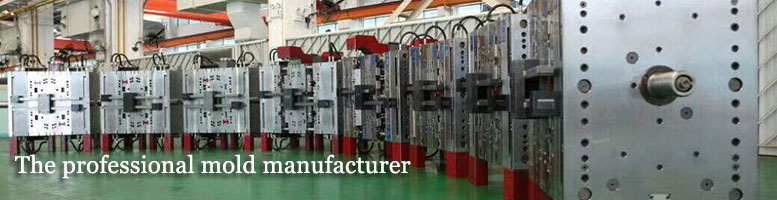
Our factory has technical personnel with years of experience in production technology management. The first-class technical facilities and high-quality raw materials ensure the quality of products and reasonable prices. We provide you with the advantage of low cost, as well as the high engineering and production standards expected by the injection molding industry in Europe, North America, and Japan, as well as some large domestic enterprises. GoodBo Mould has global customers such as HP,HONDA,Ford,Hyundai,KONKA,Canon,Nissan,Sony,Media,Samsung. Welcome OEM orders.
| Product Name | large injection mold |
| Plastic Materials | PETP(poly ethylene terephthalate),PC(polycarbonate),ABS(acrylonitrile-butadiene-styrene copolymer) ,...etc. |
| Standard | ISO9001 |
| Place of Origin | Shenzhen,Guangdong,China |
| Other materials | Rubber, Slilconce rubber, LSR,Aluminum, Zinc,Copper...Metal...etc. |
| Quality | RoSH and SGS standard |
| Feature | Non marking and Non flash |
| Size | According to your 2D, 3D Drawing |
| Packaging Size: | 183 * 177 * 241 Please consult us for specific details |
| Package | Standard exported Wooden box packed, Fumigation process(upon required) |
| Mold Building Lead Time | 4 - 5 weeks, Part measurement report (upon required) |
| Export region | Asia,Oceania |
| Export Country | San Marino,Bolivia,Cyprus,Wallis and Futuna, ...etc. |
| Surface treatment | Polish. Etched. Texture |
| Experience | 15 years experience in plastic injection mold making and plastic parts produce. |
| Mould making technology | Plastic flow/deform simulation,2D Modelling...etc. |
| Hot/ Cold Runner | HUSKY, INCOE, YDDO, HASCO, DME, MoldMaster, Masterflow, Mastip...etc. |
| Mould Life | 500000 Shots. (According to your working environment.) |
| Equipments | Drilling machines,Wire Cuting Machine,Grinding machine,CMM,EDM ,CNC...etc. |
| Lead time (days) | To be negotiated |
GoodBo Mould is one of the leading large injection mold manufacturers in China, and our mission is to provide customers with high-quality products and the highest quality service.
At GoodBo Mould we fully test all molds in-house. Trial reports and process data are provided to the client for rapid start up and all clients can be assured of tight quality control that guarantees a quality product. Mold trial run samples will be provided together with inspection reports.
We offer clients a wide range of materials to meet their product specifications, including the following:PA(polyamide),CA(cellulose acetate),PUR(polyurethane),PP(polypropylene),PBTP(poly butylene terephthalate),LDPE(low density polyethylene),PVC(poly vinyl chloride),PE(polyethylene),PPO(poly phenylene oxide),PETP(poly ethylene terephthalate),ABS(acrylonitrile-butadiene-styrene copolymer),TPE(thermoplastic),POM(polyformaldehyde),AS(acrylonitrile-styrene),PC(polycarbonate), etc.
large injection mold---FAQs Guide
2.What is the difference between high-pressure and low-pressure large injection mold?
3.What factors affect the lifespan of a large injection mold?
4.What training and support are provided for users working with the large injection mold?
5.How to make a mould?
6.How does the large injection mold contribute to achieving a desired surface finish on the molded products?
7.Are there any special solutions for making large injection mold with deep walls or complex shapes?
8.What materials are usually used to make large injection mold?
9.About large injection mold quality system
10.What is the difference between cast and machined large injection mold?
11.How can a large injection mold be corrosion-resistant?
12.What technologies are used to produce higher quality large injection mold?
13.How does the temperature of a large injection mold affect the moulding process?
14.What are the advantages and disadvantages of large injection mold made from aluminium?
15.What type of cooling system is integrated into the large injection mold, and how efficiently does it dissipate heat?
1.How do large injection mold help to reduce production costs?
large injection mold is not a product only, but also can help you comes to money-making.Moulds can help to reduce production costs by reducing the amount of time and labour required to produce a product. Moulds can be used to create multiple identical parts quickly and efficiently, eliminating the need for manual labour and reducing the amount of time needed to produce a product. Additionally, moulds can be used to create complex shapes and designs that would be difficult or impossible to create by hand, reducing the need for expensive custom tooling.
2.What is the difference between high-pressure and low-pressure large injection mold?
We focus on teamwork and communication to achieve common goals, We attach great importance to this detail.High-pressure moulds are used to create parts with complex shapes and intricate details, while low-pressure moulds are used to create parts with simpler shapes and fewer details. High-pressure moulds require more pressure to form the parts, while low-pressure moulds require less pressure. High-pressure moulds are more expensive and require more time to create the parts, while low-pressure moulds are less expensive and require less time.
3.What factors affect the lifespan of a large injection mold?
We are centered on customers and always pay attention to customers' needs for large injection mold products.
1. Temperature: Temperature can affect the growth and survival of moulds. Generally, moulds grow best in warm, damp environments. High temperatures can kill some moulds, while low temperatures can slow down their growth.
2. Humidity: High humidity levels can promote the growth of moulds, while low humidity levels can inhibit their growth.
3. Light: Moulds need light to grow, so exposure to light can affect their lifespan.
4. Airflow: Poor air circulation can create an environment that is conducive to mould growth.
5. Nutrients: Moulds need nutrients to survive, so the availability of nutrients can affect their lifespan.
6. pH: The pH of the environment can affect the growth of moulds. Generally, moulds prefer slightly acidic environments.
4.What training and support are provided for users working with the large injection mold?
Our large injection mold products have competitive and differentiated advantages, and actively promote digital transformation and innovation.Training and support for users working with the mold will vary depending on the manufacturer. Generally, the manufacturer will provide detailed instructions on how to use the mold, as well as safety guidelines. They may also provide technical support and troubleshooting assistance. Additionally, some manufacturers may offer on-site training and support for users.

5.How to make a mould?
We focus on innovation and continuous improvement to maintain a competitive advantage.
1. Start by gathering the materials you need to make the mould. You will need a container to hold the mould, a material to make the mould from (such as silicone, plaster, or clay), and a release agent (such as petroleum jelly or cooking spray).
2. Prepare the container for the mould. Make sure it is clean and dry, and then apply a release agent to the inside of the container. This will help the mould come out of the container easily when it is finished.
3. Mix the material you are using to make the mould. Follow the instructions on the package for the best results.
4. Pour the mixture into the container and spread it evenly. Make sure to fill the container completely and leave no air pockets.
5. Allow the mould to dry completely. Depending on the material you are using, this could take anywhere from a few hours to a few days.
6. Once the mould is dry, carefully remove it from the container. If necessary, use a knife or other tool to help loosen the edges of the mould.
7. Your mould is now ready to use!
6.How does the large injection mold contribute to achieving a desired surface finish on the molded products?
We adhere to the principle of integrity and transparency, and establish long -term relationships with partners, and we attach great importance to this detail.The mold contributes to achieving a desired surface finish on the molded products by providing a smooth, uniform surface that can be polished or textured to the desired finish. The mold also helps to ensure that the product is free of any defects or imperfections that could affect the surface finish. Additionally, the mold can be designed to create specific textures or patterns on the surface of the product.
7.Are there any special solutions for making large injection mold with deep walls or complex shapes?
Our products & services cover a wide range of areas and meet the needs of different fields.Yes, there are several special solutions for making molds with deep walls or complex shapes. These include using a CNC machining process, 3D printing, vacuum forming, and injection molding. Each of these processes has its own advantages and disadvantages, so it is important to consider the specific requirements of the project before deciding which process is best.
8.What materials are usually used to make large injection mold?
We have established long-term and stable partnerships with our suppliers, so we have great advantages in price and cost and quality assurance.Moulds are typically made from metal, plastic, rubber, silicone, or plaster.

9.About large injection mold quality system
We define quality as total customer satisfaction and actively deploy the push of the work for components and management standardization.Excellent and adequate processing equipments, and normalized and efficient production management are the guarantee for mould quality and delivery.
10.What is the difference between cast and machined large injection mold?
We actively participate in the large injection mold industry associations and organization activities. The corporate social responsibility performed well, and the focus of brand building and promotionCast moulds are made by pouring molten metal into a mould cavity, while machined moulds are made by cutting and shaping metal with a machine tool. Cast moulds are typically used for low-volume production, while machined moulds are used for high-volume production. Cast moulds are generally less expensive and faster to produce, while machined moulds are more precise and can produce more complex shapes.
11.How can a large injection mold be corrosion-resistant?
We have a wide range of large injection mold customer groups and establishes long -term cooperative relationships with partners. The countries we provide services include Faroe Islands,Togo,Sao Tome and Principe,Yemen,Eritrea,Mexico,Estonia.Moulds can be made corrosion-resistant by using materials such as stainless steel, aluminum, and other alloys that are resistant to corrosion. Additionally, the moulds can be coated with a corrosion-resistant material such as a paint or a powder coating.
12.What technologies are used to produce higher quality large injection mold?
We pay attention to employee development and benefits, and provide a good working environment in order to improve the efficiency of employees and improve the quality management of large injection mold products.
1. Computer Numerical Control (CNC) Machining: CNC machining is a process that uses computer-controlled machines to cut and shape materials into precise shapes and sizes. This technology is used to produce higher quality moulds with greater accuracy and repeatability.
2. 3D Printing: 3D printing is a process that uses a digital model to create a physical object. This technology is used to produce complex moulds with intricate details and shapes.
3. Laser Cutting: Laser cutting is a process that uses a laser beam to cut and shape materials into precise shapes and sizes. This technology is used to produce higher quality moulds with greater accuracy and repeatability.
4. Vacuum Forming: Vacuum forming is a process that uses a vacuum to form plastic sheets into desired shapes. This technology is used to produce higher quality moulds with greater accuracy and repeatability.
5. Injection Moulding: Injection moulding is a process that uses a heated plastic material to form a desired shape. This technology is used to produce higher quality moulds with greater accuracy and repeatability.

13.How does the temperature of a large injection mold affect the moulding process?
We have a professional team that is committed to the innovation and development of large injection mold.Temperature is a critical factor in the moulding process. If the mould is too cold, the plastic material will not flow properly and the moulded part will be of poor quality. If the mould is too hot, the plastic material will degrade and the moulded part will be of poor quality. The ideal temperature for the mould depends on the type of plastic material being used. Generally, the mould should be heated to a temperature that is slightly higher than the melting point of the plastic material. This will ensure that the plastic material flows properly and the moulded part has a good finish.
14.What are the advantages and disadvantages of large injection mold made from aluminium?
We are a new large injection mold manufacturer.
Advantages:
1. Aluminium is lightweight and strong, making it ideal for creating intricate moulds.
2. Aluminium is a good conductor of heat, which makes it ideal for use in casting processes.
3. Aluminium is corrosion-resistant, making it a great choice for moulds that will be used in wet or humid environments.
4. Aluminium is relatively inexpensive compared to other metals, making it a cost-effective choice for moulds.
Disadvantages:
1. Aluminium is not as strong as other metals, making it more prone to wear and tear.
2. Aluminium is not as durable as other metals, making it more susceptible to damage from heat and pressure.
3. Aluminium is not as easy to work with as other metals, making it more difficult to create intricate moulds.
4. Aluminium is not as resistant to corrosion as other metals, making it more prone to rusting.
15.What type of cooling system is integrated into the large injection mold, and how efficiently does it dissipate heat?
I have a comprehensive after -sales service system, which can pay attention to market trends in time and adjust our strategy in a timely manner.The type of cooling system integrated into the mold depends on the specific mold design and the materials used. Generally, cooling systems are designed to dissipate heat as efficiently as possible, using a combination of water, air, and/or oil to cool the mold. The efficiency of the cooling system depends on the size and complexity of the mold, as well as the materials used.
Tags:plastic baby chair mould,china thin wall injection mold,table injection mould,pa injection molding,injection blow mold,spru injection mold