
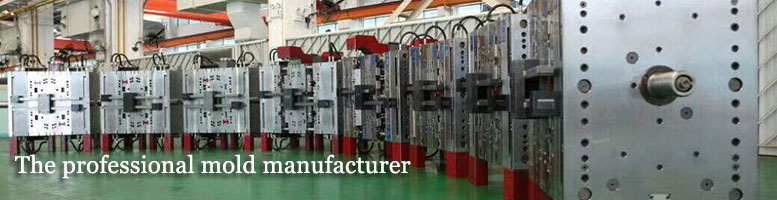
We can meet various requirements from different types of customers. We pursue the management tenet of Quality is superior.The area of expertise covers Plastic injection,Multi color injection molding,Blow Molding,Plastic mold,Mock up sample,Mold standard components, etc.GoodBo Mould designs, makes mold and manufactures injection molded products and parts for a wide variety of industries. GoodBo Mould has our global customers such as Ford,Hyundai,HP,Canon,Haier,FAW-Volkswagen,Sony,Samsung,Media,etc.
| Product name | cover injection mould |
| Place of Origin | China |
| Runner | Cold Runner. Hot Runner: Yudo |
| Port | Shenzhen |
| Colors | Customized Colors |
| Condition | New |
| Design software | CAD/PROE/UG/3D/STEP/PDF/JPG |
| Packing Size(cm) | 230*139*200 Specific consultation with us |
| Brand Name | GoodBo Mould |
| Export region | Oceania,Africa,Asia |
| Export country | Oceania,Africa,Asia...etc |
| Mould life | 350000 shots |
| Certification | ISO90001 |
| Product Material | GPS(general polystyrene),LDPE(low density polyethylene),PBTP(poly butylene terephthalate)...etc. |
| Mould making technology | CNC Programming,3D Modelling...etc. |
| Application | Medical,Architectural,Aerospace...etc. |
| After-sales Service | Always maintained |
| MOQ | Negotiable |
| Packaging Details | Packed in cartons |
| Supply Ability | 2000-100000 Set/Sets per Month (See specific model products) |
| Lead time (days) | 20-40 (To be negotiated) |
| Mould Base | LKM,HASCO... |
GoodBo Mould is one of the leading cover injection mould manufacturers in China, and our mission is to provide customers with high-quality products and the highest quality service.
At GoodBo Mould we have invested in both people and technology to ensure that our designs meet your highest expectations. Our experienced mold designers utilize the latest software to directly take the clients CAD model into design. All mold designs are then validated to our clients tooling standards and molding specifications.
Our engineering and mold making technology include:Pro/Engineer(3D Modelling),SolidWorks(3D Modelling),Moldflow Mold Advisor(Plastic flow/deform simulation),AutoCad(2D Modelling),etc.
cover injection mould---FAQs Guide
2.What type of runner and gate systems are incorporated into the cover injection mould design?
3.What type of part ejection system does the cover injection mould use, and how does it ensure smooth ejection without defects?
4.In what ways can cover injection mould cooling be improved?
5.About cover injection mould delivery time
6.What types of finishes can be applied to cover injection mould?
7.How does the temperature of a cover injection mould affect the moulding process?
8.What is the significance of angle control in cover injection mould?
9.What kind of coatings are used for cover injection mould surfaces to reduce wear and tear?
10.About cover injection mould,which materials do you support?
11.About cover injection mould production equipment
12.What is the difference between an injection mould and a compression cover injection mould?
13.How to make a mould?
1.What materials are usually used to make cover injection mould?
We have established long-term and stable partnerships with our suppliers, so we have great advantages in price and cost and quality assurance.Moulds are typically made from metal, plastic, rubber, silicone, or plaster.
2.What type of runner and gate systems are incorporated into the cover injection mould design?
We continue to invest in research and development and continue to launch innovative products.The type of runner and gate systems incorporated into the mold design depend on the type of part being molded and the desired outcome. Common runner and gate systems include cold runner systems, hot runner systems, direct gating, edge gating, and valve gating.
3.What type of part ejection system does the cover injection mould use, and how does it ensure smooth ejection without defects?
We focus on providing high quality cover injection mould products and services.The type of part ejection system used in a mold depends on the type of mold and the complexity of the part being molded. Generally, the most common type of part ejection system is a mechanical ejector system, which uses pins, blades, or other mechanical components to push the part out of the mold. This system ensures smooth ejection without defects by providing a consistent force to the part, which prevents it from sticking to the mold or becoming damaged during the ejection process. Additionally, the ejector system can be adjusted to provide the optimal amount of force for the part being molded.
4.In what ways can cover injection mould cooling be improved?
We enjoy high authority and influence in the industry and continue to innovate products and service models.
1. Increase air circulation: Increasing air circulation in the area where the mold is cooling can help to reduce the temperature of the mold more quickly.
2. Use a cooling system: Installing a cooling system such as a water-cooled chiller can help to reduce the temperature of the mold more quickly and efficiently.
3. Use a fan: Installing a fan in the area where the mold is cooling can help to circulate the air and reduce the temperature of the mold more quickly.
4. Use a heat exchanger: Installing a heat exchanger in the area where the mold is cooling can help to transfer the heat away from the mold more quickly.
5. Use a cooling spray: Applying a cooling spray to the mold can help to reduce the temperature of the mold more quickly.
6. Use a cooling blanket: Wrapping a cooling blanket around the mold can help to reduce the temperature of the mold more quickly.
5.About cover injection mould delivery time
3-4 weeks for the 1st.artical. Lead time for plastic mold manufacturing depends on the complexity of the mold and the size of the order.
6.What types of finishes can be applied to cover injection mould?
We attach importance to the innovation ability and team spirit of employees, have advanced R & D facilities and laboratories, and have a good quality management system.
1. Powder Coating
2. Anodizing
3. Painting
4. Plating
5. Polishing
6. Sandblasting
7. Heat Treating
8. Ceramic Coating
9. Laser Etching
10. Vacuum Metallizing
7.How does the temperature of a cover injection mould affect the moulding process?
We have a professional team that is committed to the innovation and development of cover injection mould.Temperature is a critical factor in the moulding process. If the mould is too cold, the plastic material will not flow properly and the moulded part will be of poor quality. If the mould is too hot, the plastic material will degrade and the moulded part will be of poor quality. The ideal temperature for the mould depends on the type of plastic material being used. Generally, the mould should be heated to a temperature that is slightly higher than the melting point of the plastic material. This will ensure that the plastic material flows properly and the moulded part has a good finish.
8.What is the significance of angle control in cover injection mould?
We have advanced production equipment and technology to meet the needs of customers, and can provide customers with high quality, low priced cover injection mould products.Angle control in moulds is important for ensuring that the finished product has the desired shape and dimensions. It is also important for controlling the flow of molten material during the injection moulding process. Angle control helps to ensure that the molten material is evenly distributed throughout the mould cavity, which helps to reduce the risk of defects in the finished product. Additionally, angle control helps to reduce the risk of warping and other deformities in the finished product.

9.What kind of coatings are used for cover injection mould surfaces to reduce wear and tear?
Our cover injection mould products undergo strict quality control to ensure customer satisfaction.Common coatings used for mould surfaces to reduce wear and tear include hard chrome plating, electroless nickel plating, and diamond-like carbon (DLC) coatings. Hard chrome plating is a hard, wear-resistant coating that is applied to the mould surface to reduce friction and wear. Electroless nickel plating is a corrosion-resistant coating that is applied to the mould surface to reduce wear and tear. Diamond-like carbon (DLC) coatings are a type of hard, wear-resistant coating that is applied to the mould surface to reduce friction and wear.
10.About cover injection mould,which materials do you support?
We offer clients a wide range of materials:ABS(acrylonitrile-butadiene-styrene copolymer), CA(cellulose acetate), AS(acrylonitrile-styrene), GPS(general polystyrene), HDPE(high density polyethylene), LDPE(low density polyethylene), PA(polyamide), PBTP(poly butylene terephthalate), PC(polycarbonate), PE(polyethylene), PETP(poly ethylene terephthalate), PMMA(poly methyl methacrylate), POM(polyformaldehyde), PP(polypropylene),PPO(poly phenylene oxide), PPS(poly phenylene sulfide), PUR(polyurethane), PVC(poly vinyl chloride), TPE(thermoplastic), etc.
11.About cover injection mould production equipment
Our mold processing equipment mainly includes stamping equipment, CNC machining equipment, electrical discharge machining equipment, wire cutting machines, plasma cutting machines, lathes, milling machines, grinders, drilling machines, and casting equipment.
12.What is the difference between an injection mould and a compression cover injection mould?
We have been working hard to improve service quality and meet customer needs.An injection mould is a tool used to produce plastic parts by injecting molten material into a mould cavity. The molten material is injected under pressure and cooled to form the desired shape. A compression mould is a tool used to produce plastic parts by pressing a preheated plastic material into a mould cavity. The material is then cooled and hardened to form the desired shape. The main difference between an injection mould and a compression mould is the way in which the molten material is introduced into the mould cavity.

13.How to make a mould?
We focus on innovation and continuous improvement to maintain a competitive advantage.
1. Start by gathering the materials you need to make the mould. You will need a container to hold the mould, a material to make the mould from (such as silicone, plaster, or clay), and a release agent (such as petroleum jelly or cooking spray).
2. Prepare the container for the mould. Make sure it is clean and dry, and then apply a release agent to the inside of the container. This will help the mould come out of the container easily when it is finished.
3. Mix the material you are using to make the mould. Follow the instructions on the package for the best results.
4. Pour the mixture into the container and spread it evenly. Make sure to fill the container completely and leave no air pockets.
5. Allow the mould to dry completely. Depending on the material you are using, this could take anywhere from a few hours to a few days.
6. Once the mould is dry, carefully remove it from the container. If necessary, use a knife or other tool to help loosen the edges of the mould.
7. Your mould is now ready to use!
Tags:square plastic mold,china customized plastic injected mould,china plastic chair injection mold,plastic mold in taiwan,injection molding,plastic tool box moulds,pour plastic mold